
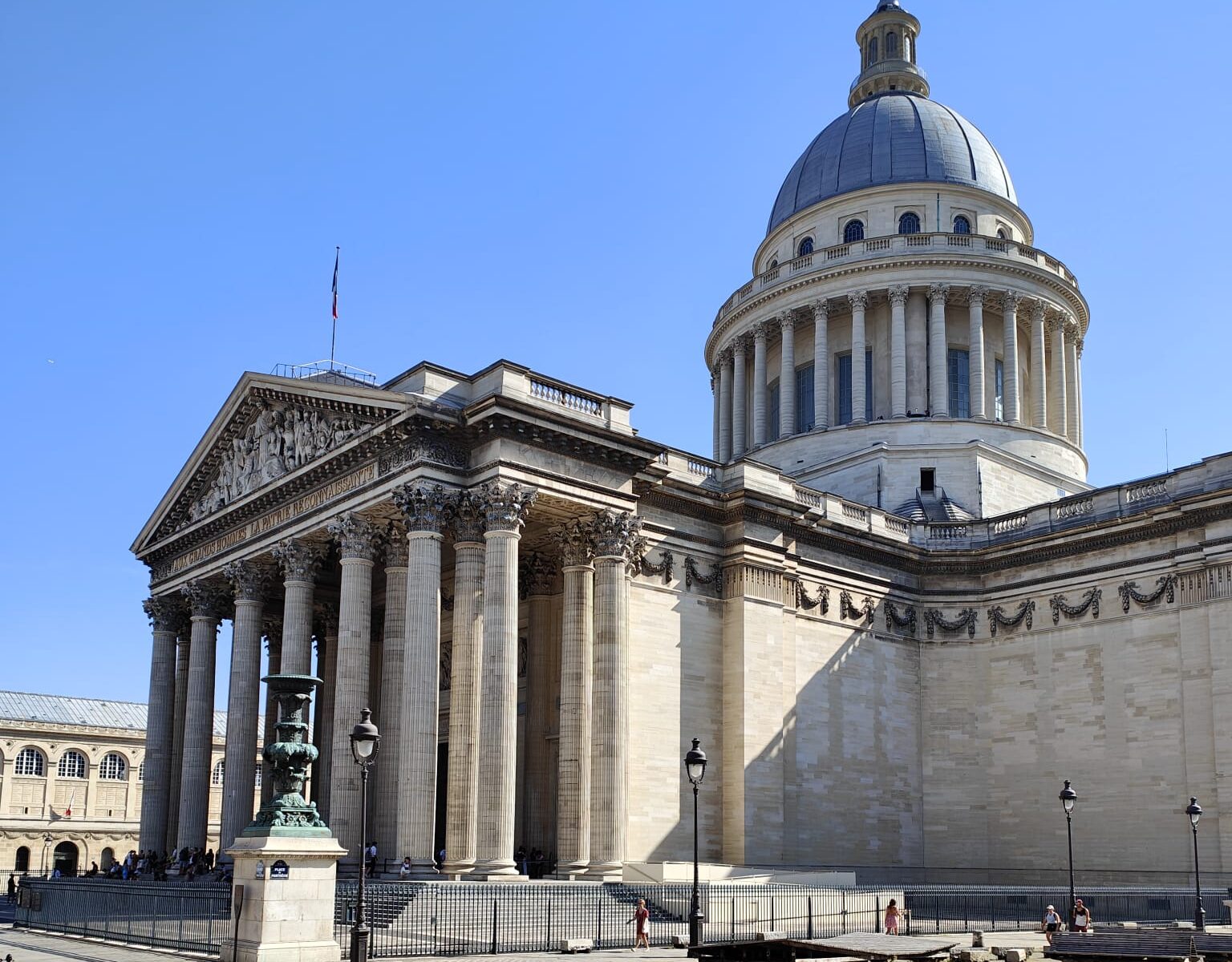
Nestled in the Italian quarter of Paris is the Parisian Pantheon. When one hears the word Pantheon, one’s mind thinks Rome. Yet here I am standing in Paris, slightly bewildered at the sight, making the inevitable comparisons, yet feeling a sense of betrayal that the glory of Rome has been duped. My naivety and confusion continue as the dome on top looks like that of the Vatican or St Paul’s Cathedral in London. As I approach, I take a moment to ask myself, am I really in Paris or Rome (or maybe London)?
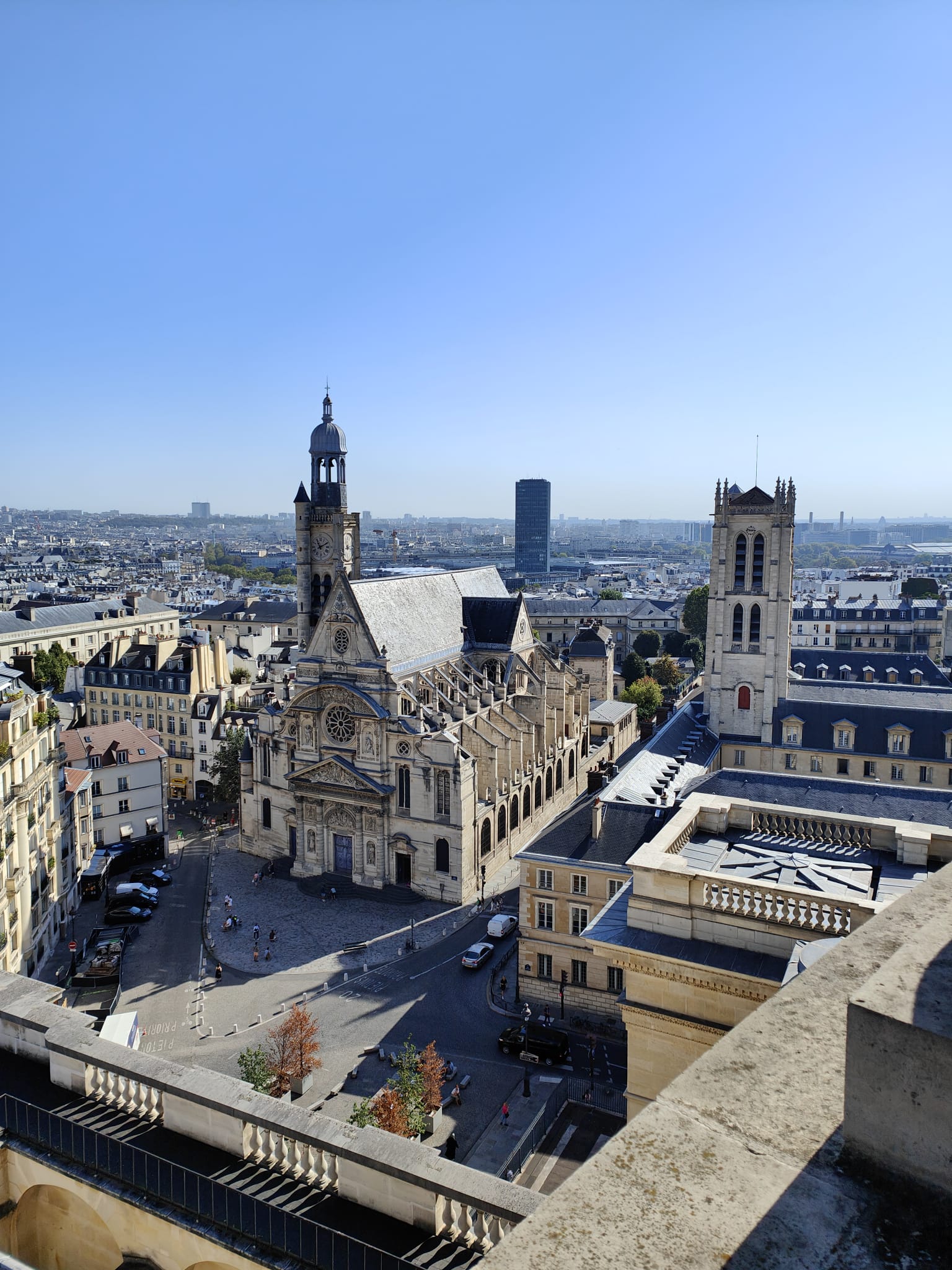
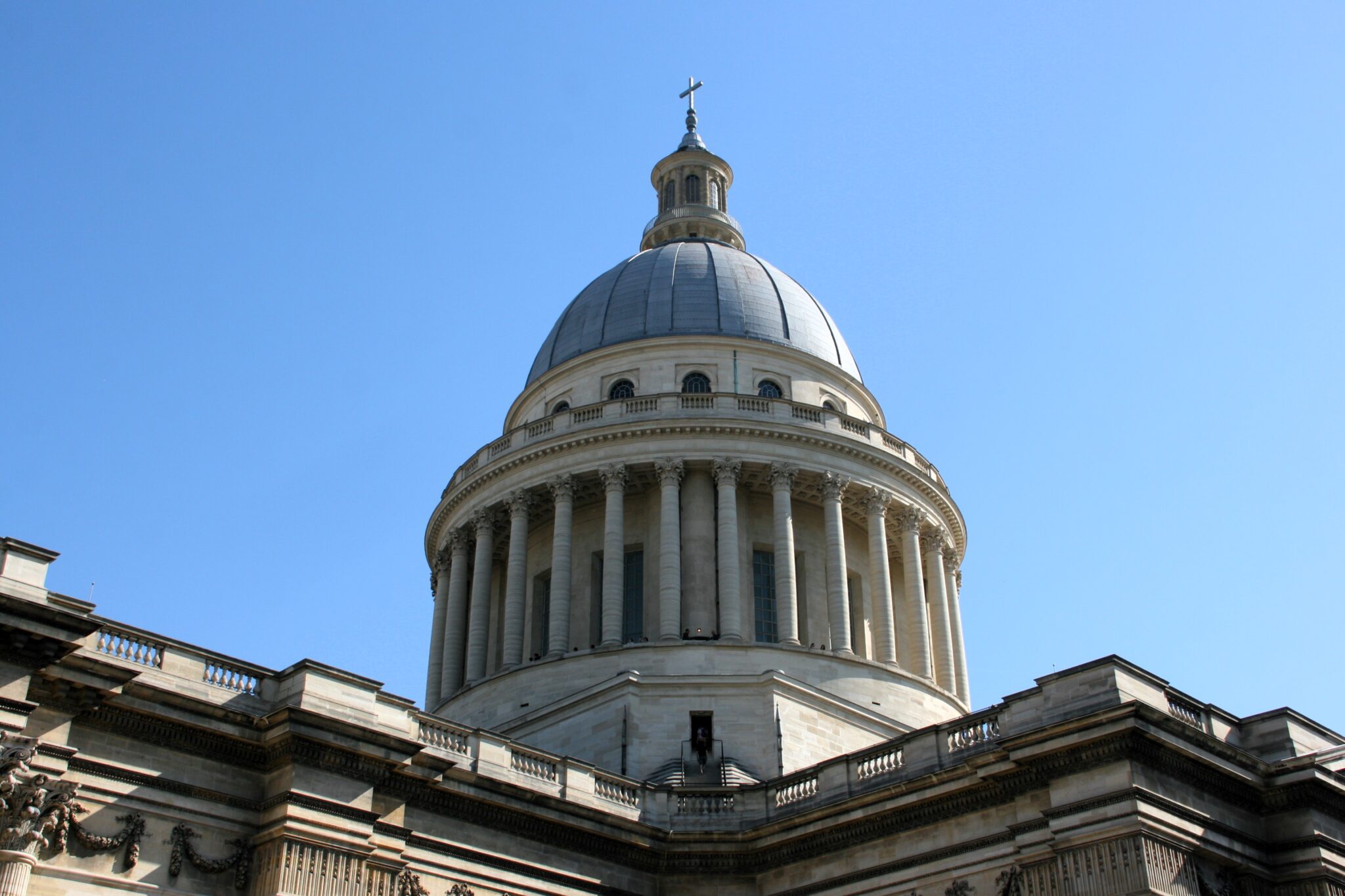
This Roman inspired monument was an ambitious project to rival these two religious buildings. The towering Corinthian columns guarding the entrance, seem like a spitting image of the Roman equivalent. A noticeable difference between the two, though, is the impressive dome that crowns the roof. It is well worth paying (16E 2025 summer price) to go up and to get wonderful 360º views of the city.
Originally it was built as a church under the commission of King Louis XV to honor Saint Geneviève and house her relics. The former abbey church gives a glimpse into France’s tumultuous history. It is not a pantheon to the gods but is now a secular temple. Its crypt is home to the remains of some of France’s greatest people. Inside the Pantheon itself, the ‘crossing’ of the church is the site of a scientific display (more later). Join me as I explore yet another Parisian monument.
Pantheon origins
In 1744 King Louis XV was on the throne of France. He was involved in the War of the Austrian Succession when he fell seriously ill in Metz, France. This was one battle that King Louis XV was able to call a success. His battles rarely resulted in victories, and they were a drain on the nation’s coffers (important to know for later). During his illness King Louis XV sought help from Saint Geneviève, the patron saint of Paris.
His recovery from serious illness meant he went on a pilgrimage to the abbey on top of Sainte-Geneviève Mountain where the Saine-Geneviève relics were kept. Sainte-Geneviève Mountain is hardly such, but a small hill overlooking the Seine which would have been on the outskirts of Paris. King Louis XV made a promise to the monks there that he would reconstruct their ancient church and dedicate it to the patron saint of Paris and France.
Embarrassingly, King Louis XV made such a promise with no money in the bank. Rather than borrow he organised a huge royal lottery to raise the money. The money was eventually raised after 20 years. The first stone was laid by the king on the 6th September 1764.
Pantheon Design & Architecture
The chosen architect for this monarchist project was Jacques-Germain Soufflot (1713-1780). Relatively young and an unknown he chose a Greek cross plan for the layout with a triple dome to sit on the top. His first design was submitted in 1755. Like the king he would never see the finished church. It’s remarkable to consider the length of time that was taken to build these structures. The project was completed in 1790, i.e., it took an incredible 26 years to finish.
The similarities to the Pantheon in Rome are for all to see on the main façade. Classical Corinthian columns sit underneath the triangular pediment above. In the Roman Pantheon the words relate to the builder Marcus Agrippa: in the Parisian Pantheon the words read “to great men, the grateful homeland”.
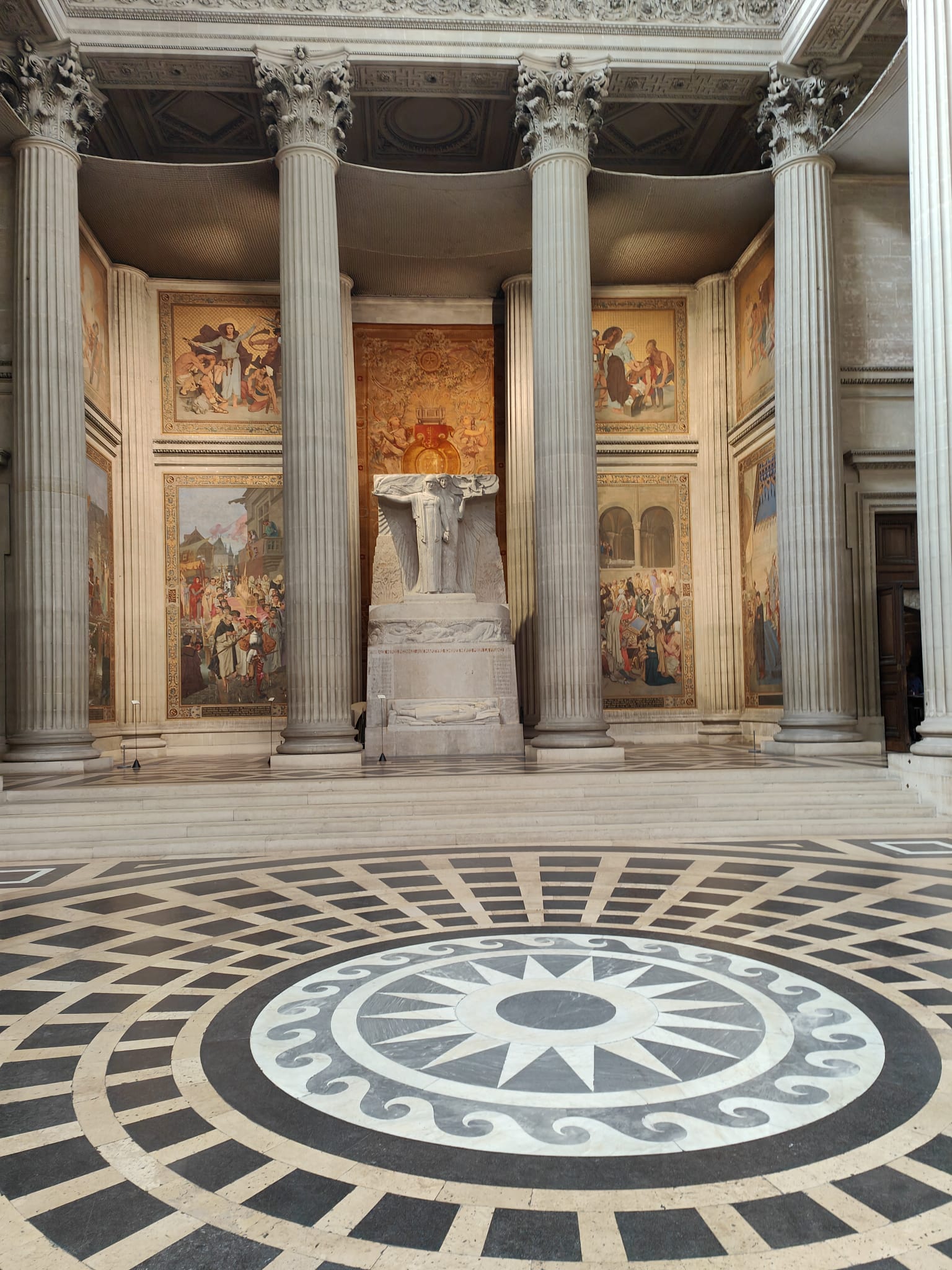
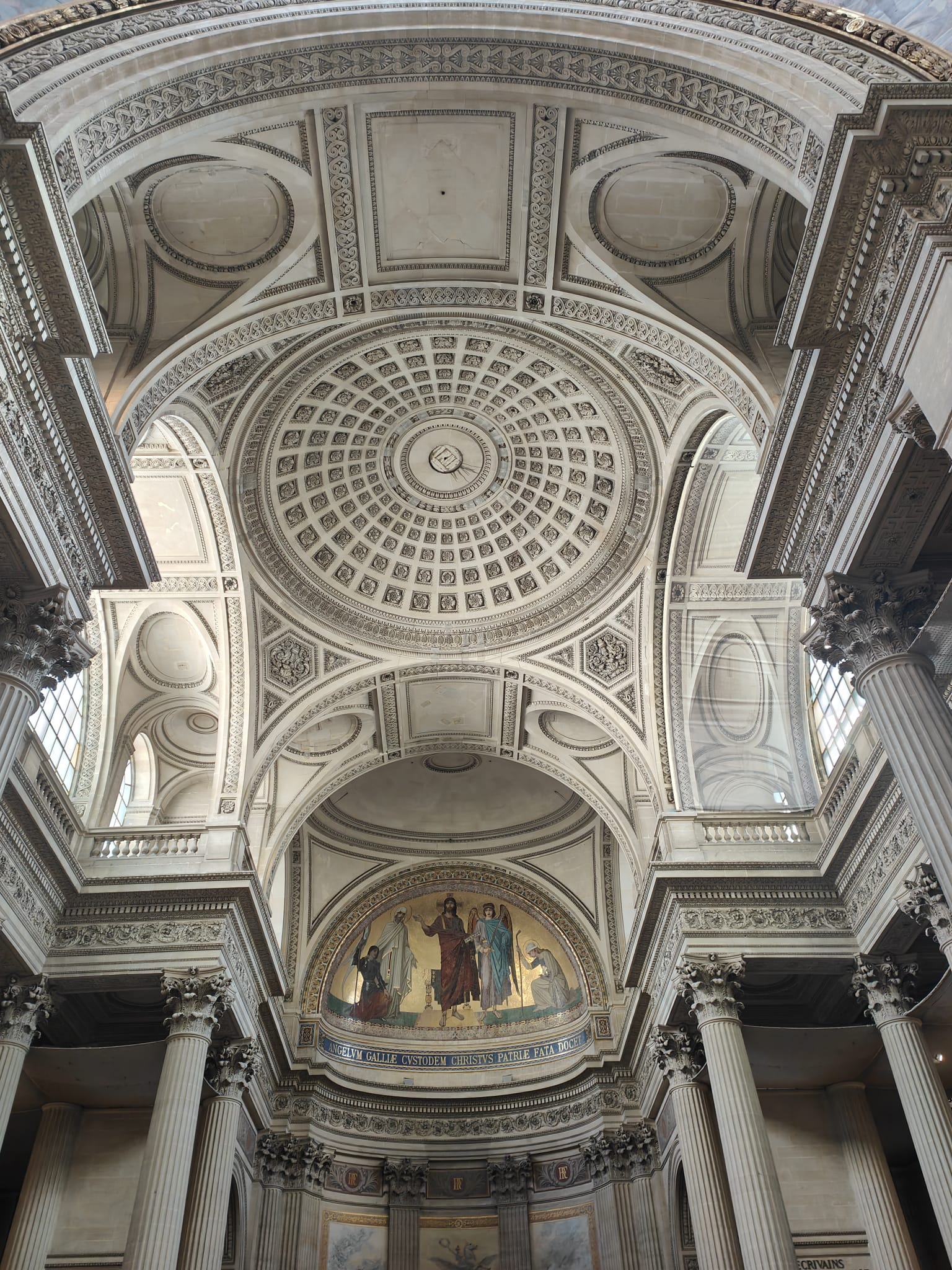
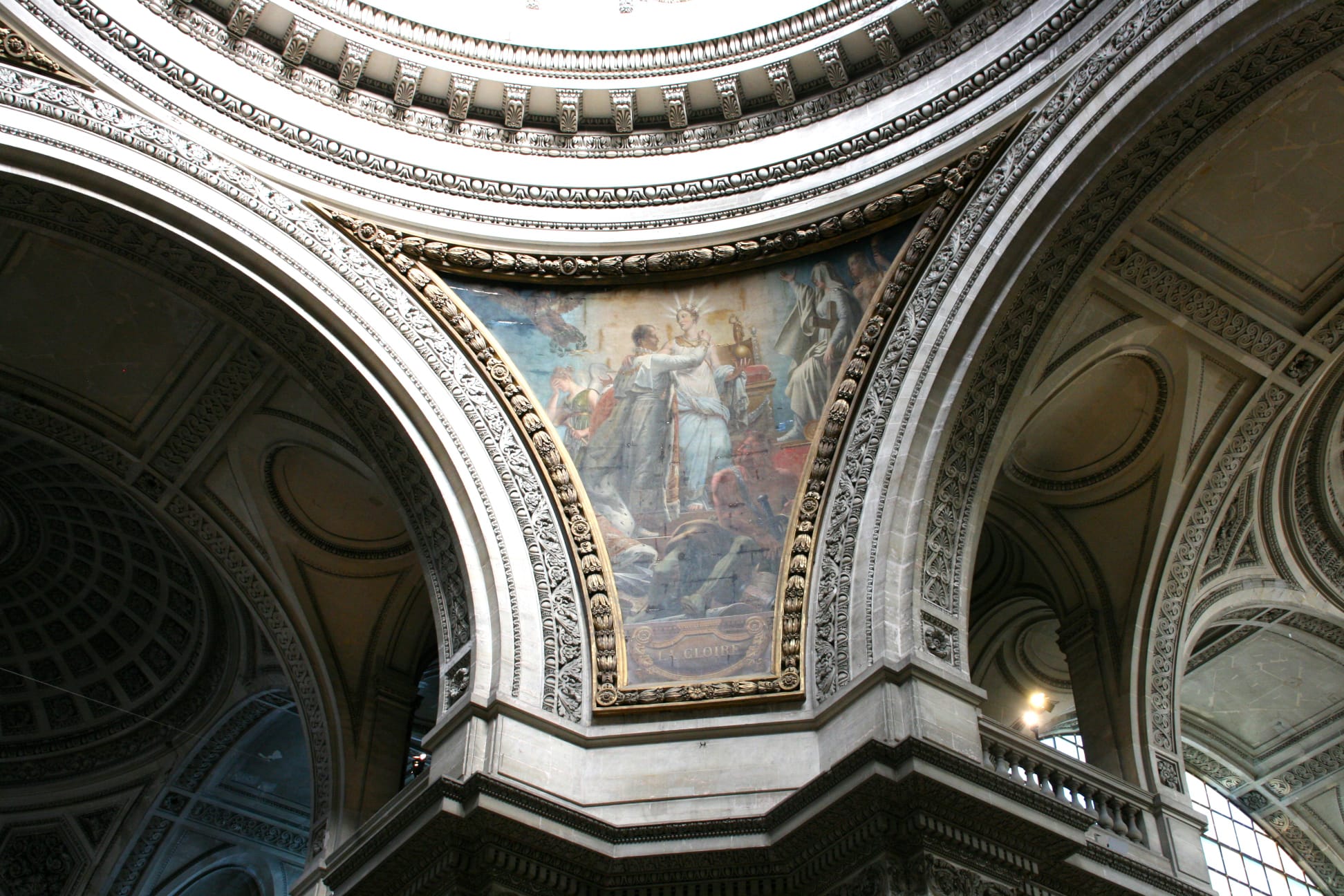
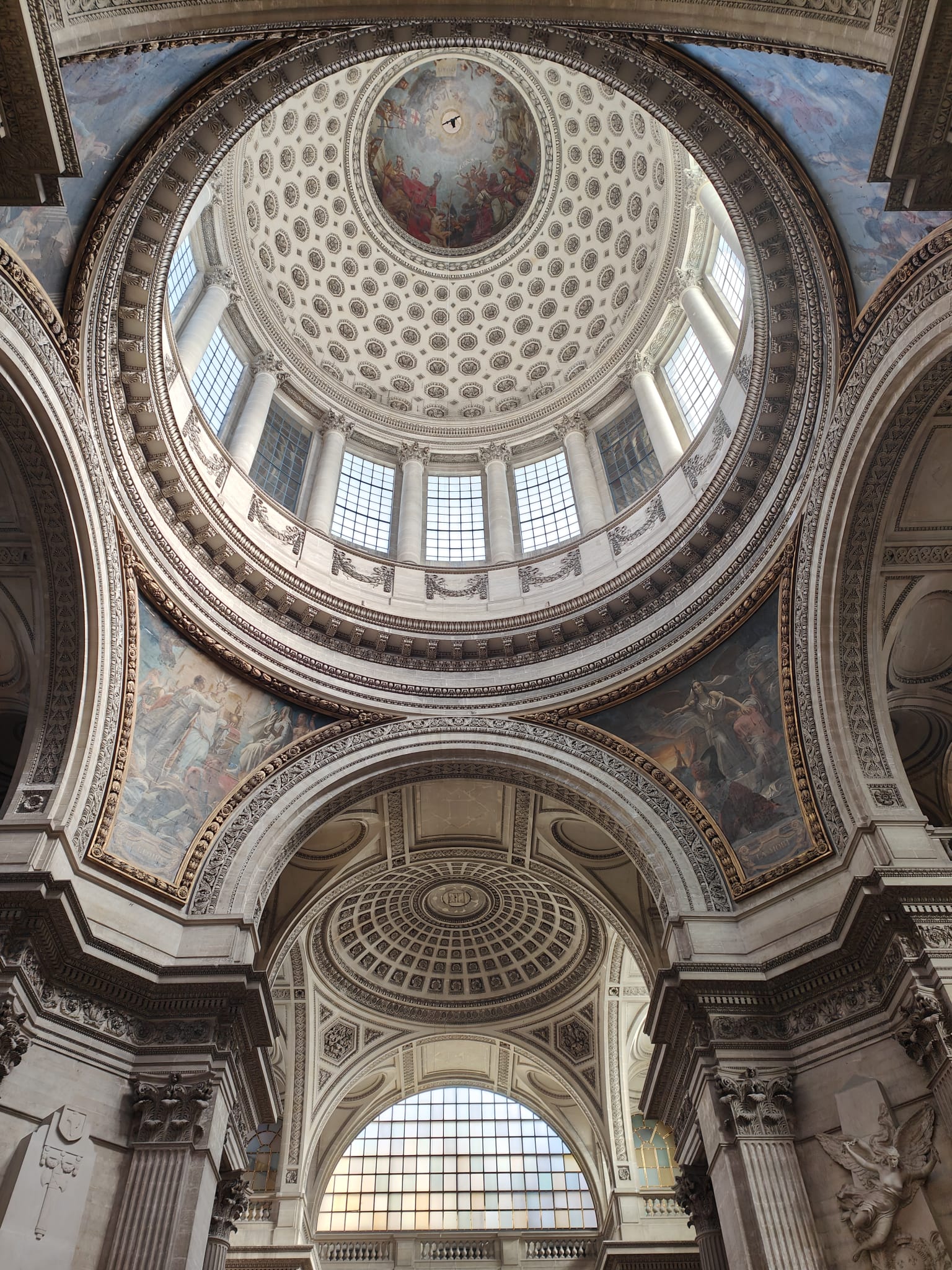
Stepping inside be prepared to be wowed as the art and architecture combine for a beautiful display. Domes, vaults, ceilings and have been perfectly aligned to allow the light to pour in. The inside is more vibrant than the solemn appearance of the older Rome edition. The best part of 1800 years separate the construction of the two buildings. The Greek cross design means there are 4 naves of equal size emanating from the central crossing.
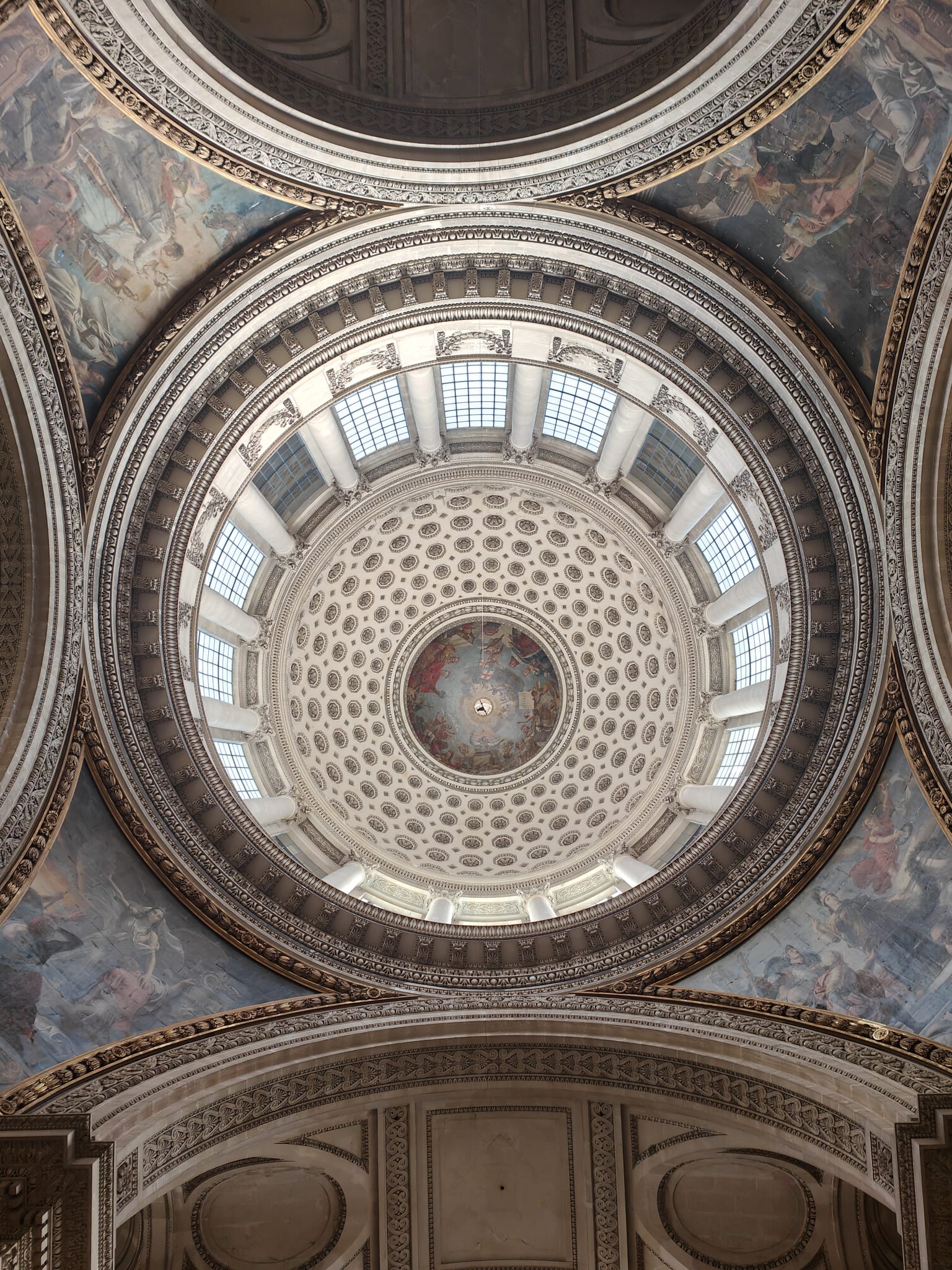
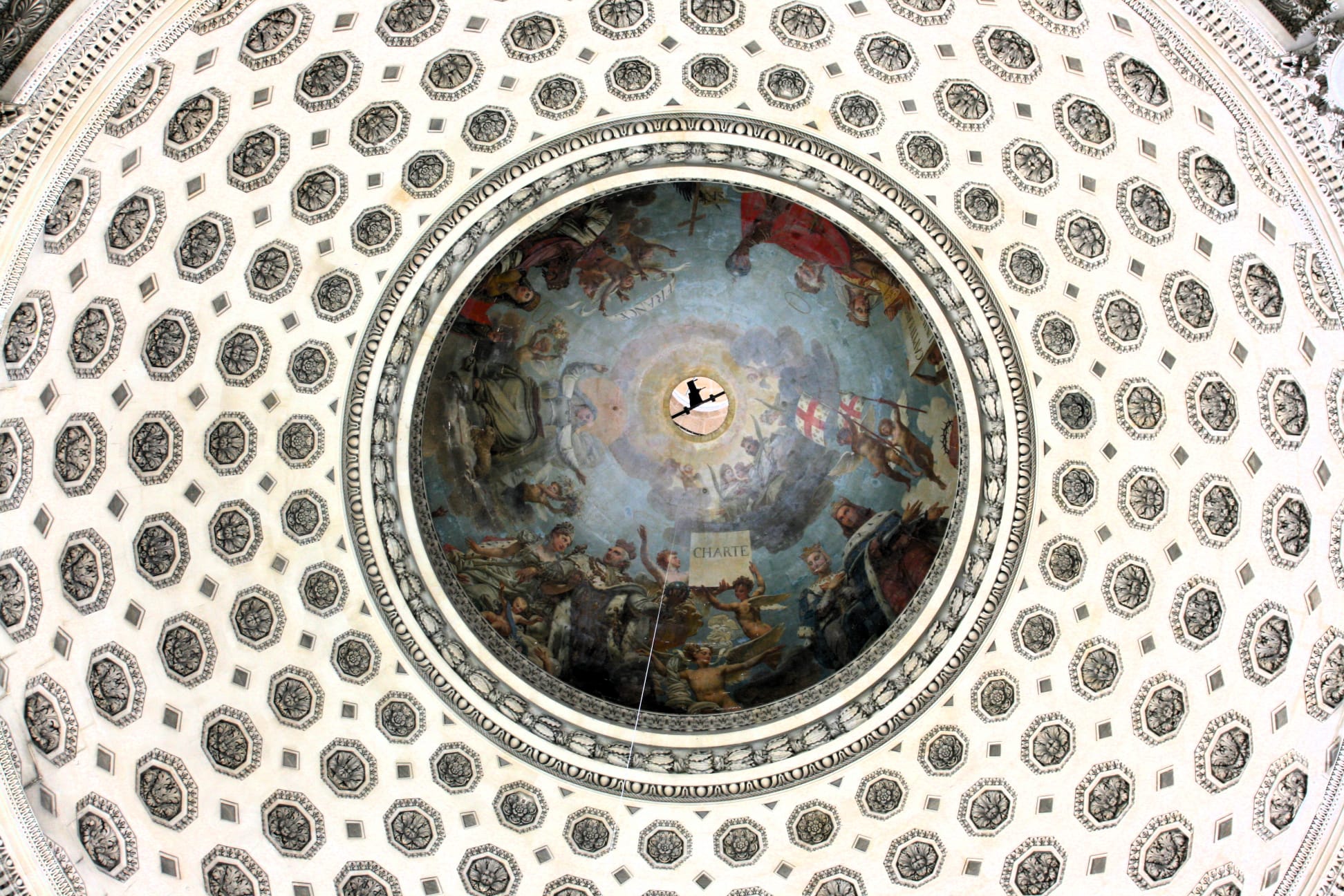
Above the central crossing is the 3 layered dome. Comparisons here should shift from the Roman Pantheon and pass to another building in the Italian capital along with Sir Christopher Wren’s masterpiece in London. There are similarities between St Peter’s Basilica and St Paul’s Cathedral and these may be compared with the Parisian Pantheon.
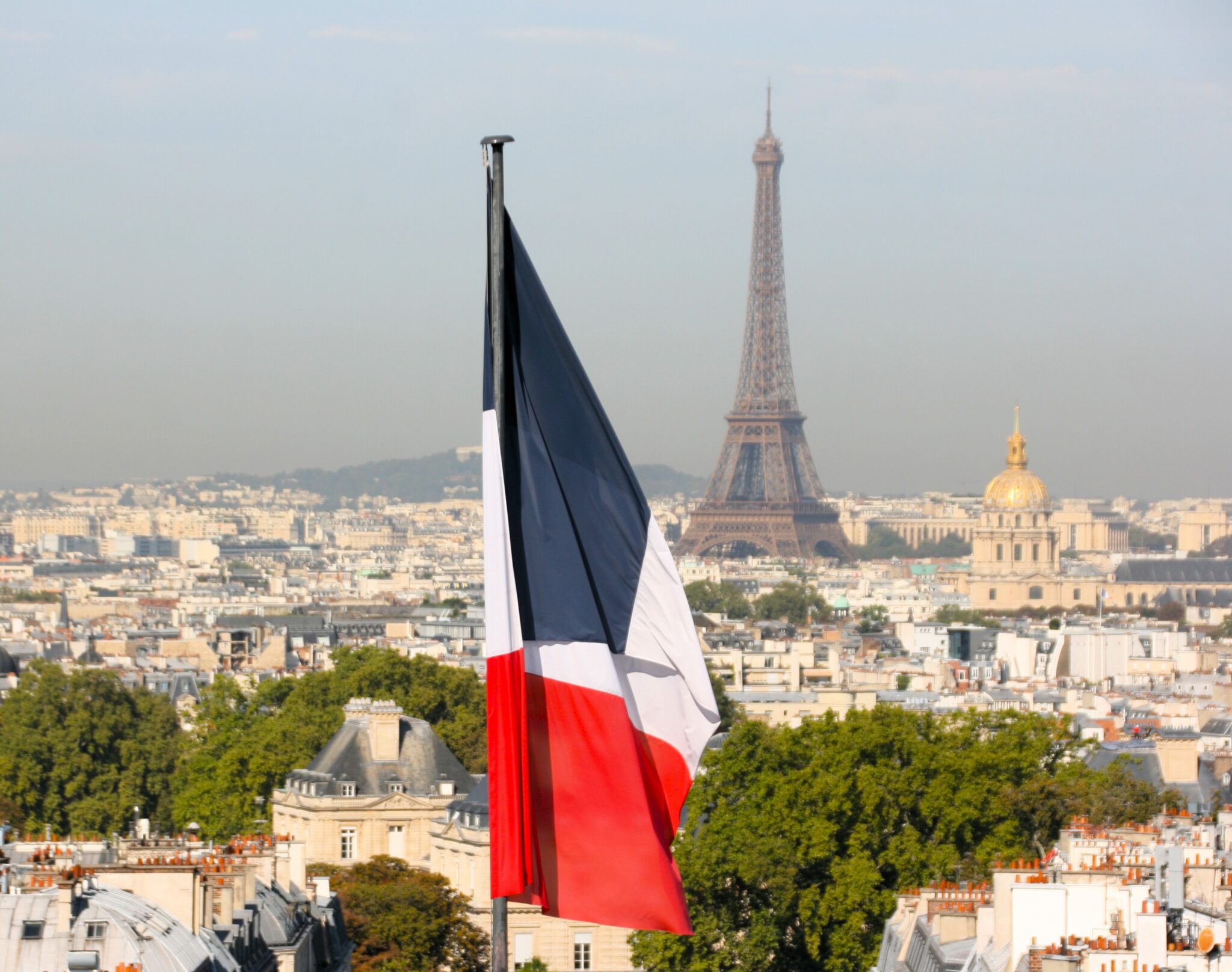
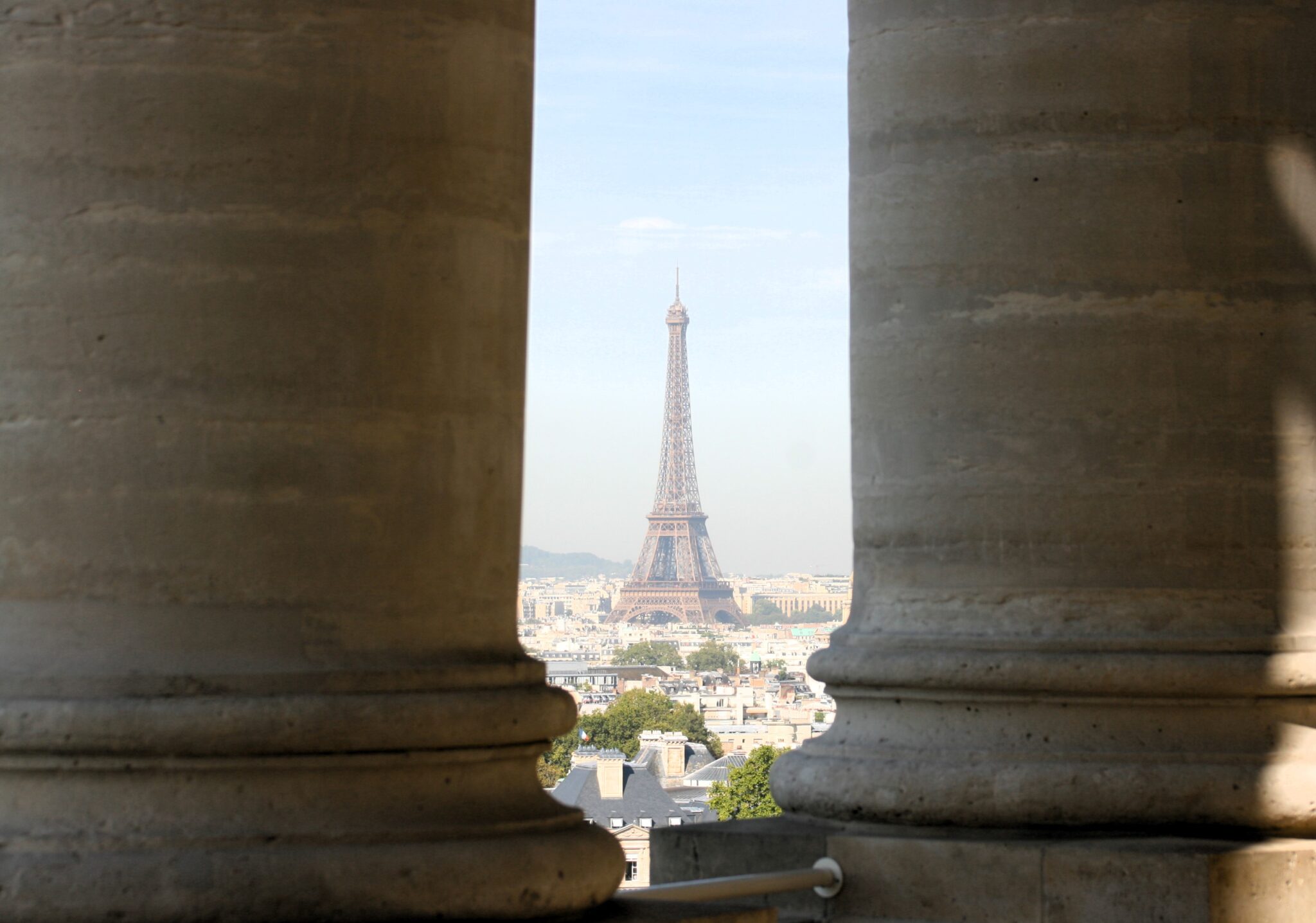
Roman columns surround the bottom of the dome which then sits on top. They provide one of the most magical views across Parisian skyline. The Soufflot design allowed for each dome to fit one inside the other. Maybe Soufflot had been to Florence and seen how the dome on the Cathedral Santa Maria del Fiore was constructed.
Church or Temple
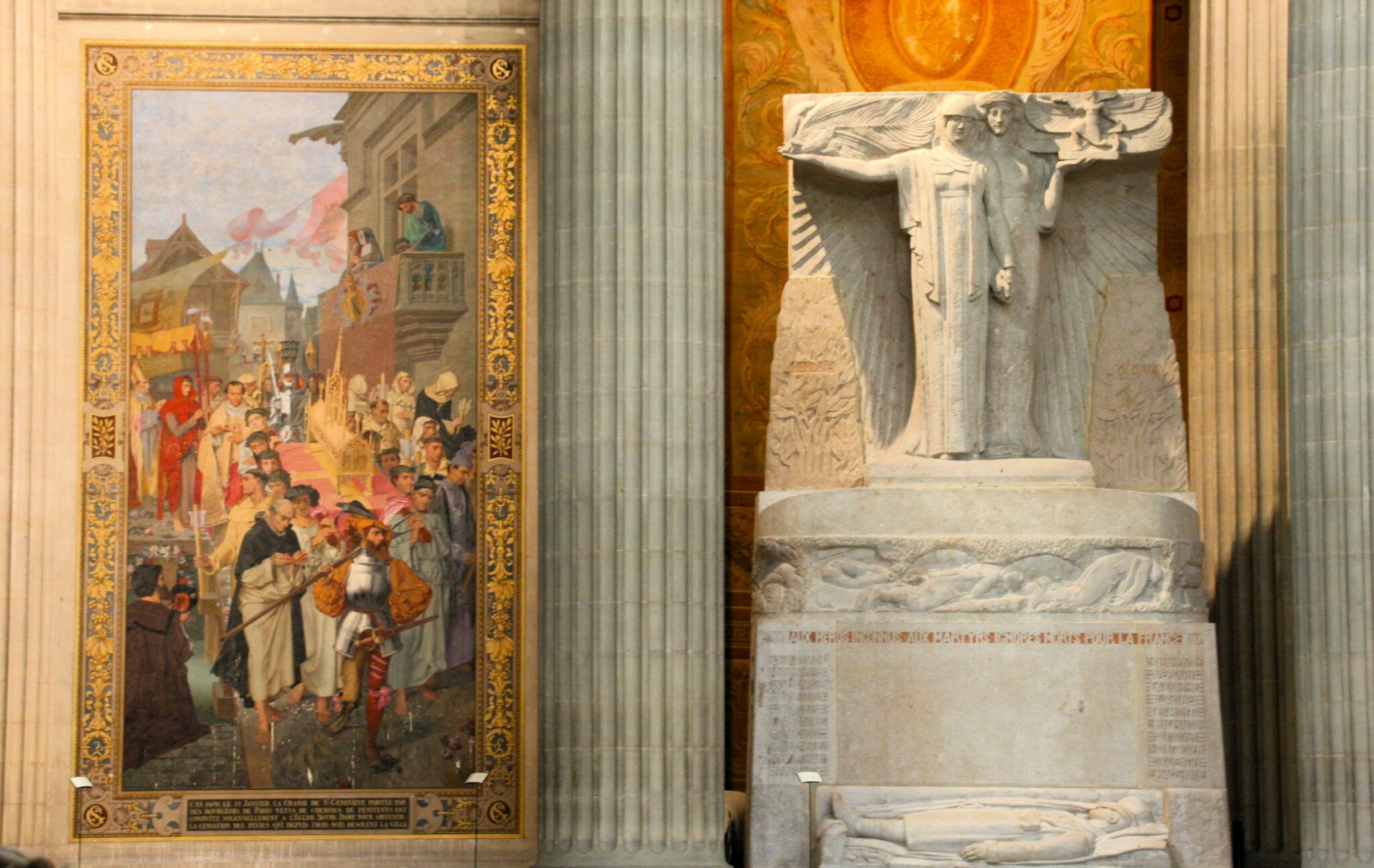
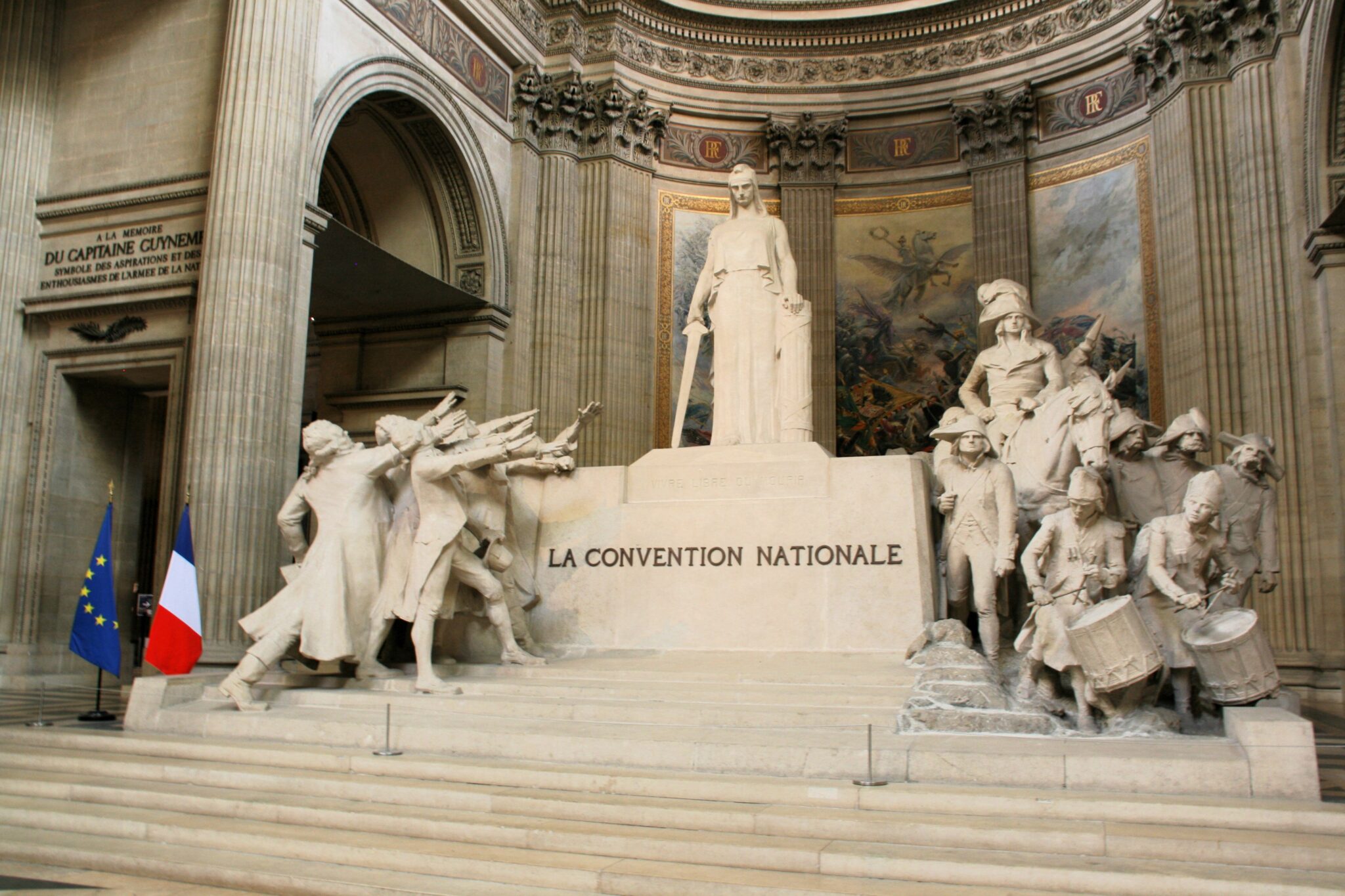
The building was completed shortly after the French revolution began and it was going to share the ups and downs of the nation. Its use changed an incredible 6 times from a church to a temple.
Marquis de Vilette proposed that the church be made a temple devoted to liberty, on the model of the Pantheon in Rome. The Roman Pantheon remains a Roman Catholic church whereas Paris’s version is now purely a secular temple. Napoleon I returned the building to the Catholic Church in 1806.
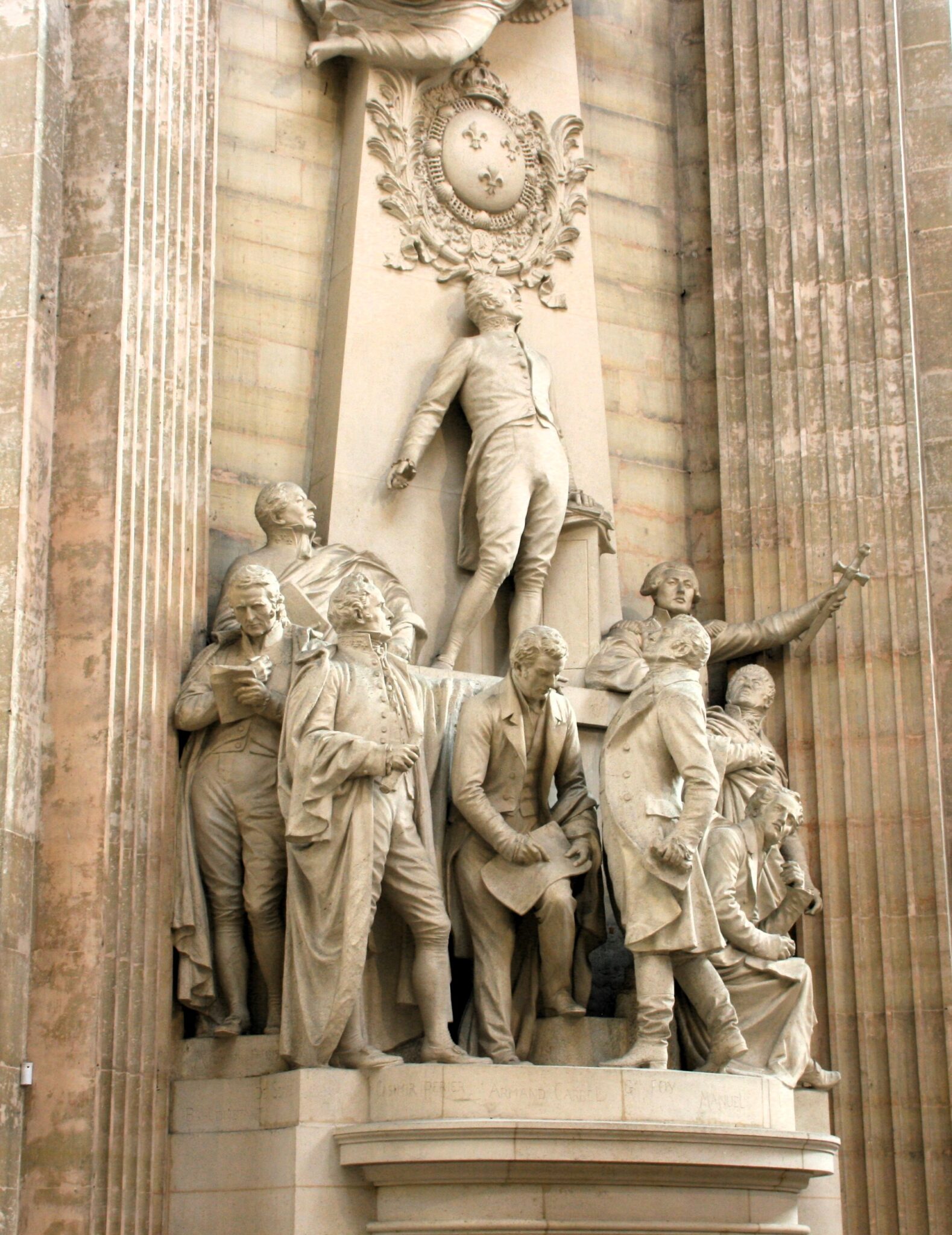
The crypt has remained a mausoleum for many French dignitaries since that time – a who’s who of modern French influence. The bodies of people with illustrious names including writers Voltaire, Rousseau, Victor Hugo (hunchback of Notre-Dame and Les Misérables), Émile Zola and Alexandre Dumas and their memorials are to be found there. The remains of scientists Louis Braille (creator of a tactile writing system of raised dots), Marie & Pierre Curie are also there. Monuments to national heroes and politicians like Jean Moulin, Simone Veil and Jean Jaures may be discovered there. In total there are 81 people buried in the Pantheon – 75 men and 6 women.
Foucault Pendulum
“You are invited to come and see the Earth turn”. These are the words written on invitations from 1851 inviting people to come to see an experiment at the Parisian Pantheon. The dome, whilst very aesthetically very pleasing, also became practical. Napoleon III, who was fond of science and history, allowed the physicist Léon Foucault and the engineer Gustave Froment to use the dome to demonstrate their experiment about the earth turning. I must confess that I somewhat ignored the importance of this when I visited.
Alas when you hear Pantheon, you think of Rome not Paris
You are not wrong when you think, ‘Is there a Pantheon in Paris?’ Well, there certainly is and one cannot argue as to its beauty and its history. It tends to be omitted from most Parisian itineraries which makes for a pleasant and enjoyable visit. This maybe because the Roman Pantheon is more illustrious, more historic and has stood the test of time. It’s lack of profile may just be down to ignorance of its existence.
Ignore this place at your peril – its superb design and subsequent construction was inspired not only by the Roman version but by another iconic Roman building – St Peter’s Basilica. The Neo-classical architecture is imposing yet pleasing as Paris sought to compete with the two other great religious buildings of the time and, in my opinion, they did a good job. Having visited all four mentioned in this post yet only written about one, I must find some time and dedicate posts to each.
So, I leave this fascinating building, a hidden gem and a must see visit when in the city. I’m saying to myself, “When you hear the word Pantheon, think both Rome and Paris.”
I learn at least one thing every time I read these blogs.
Among the many things learnt this is the word pendentive – never heard or seen this word before so had to look it up. Thanks.