
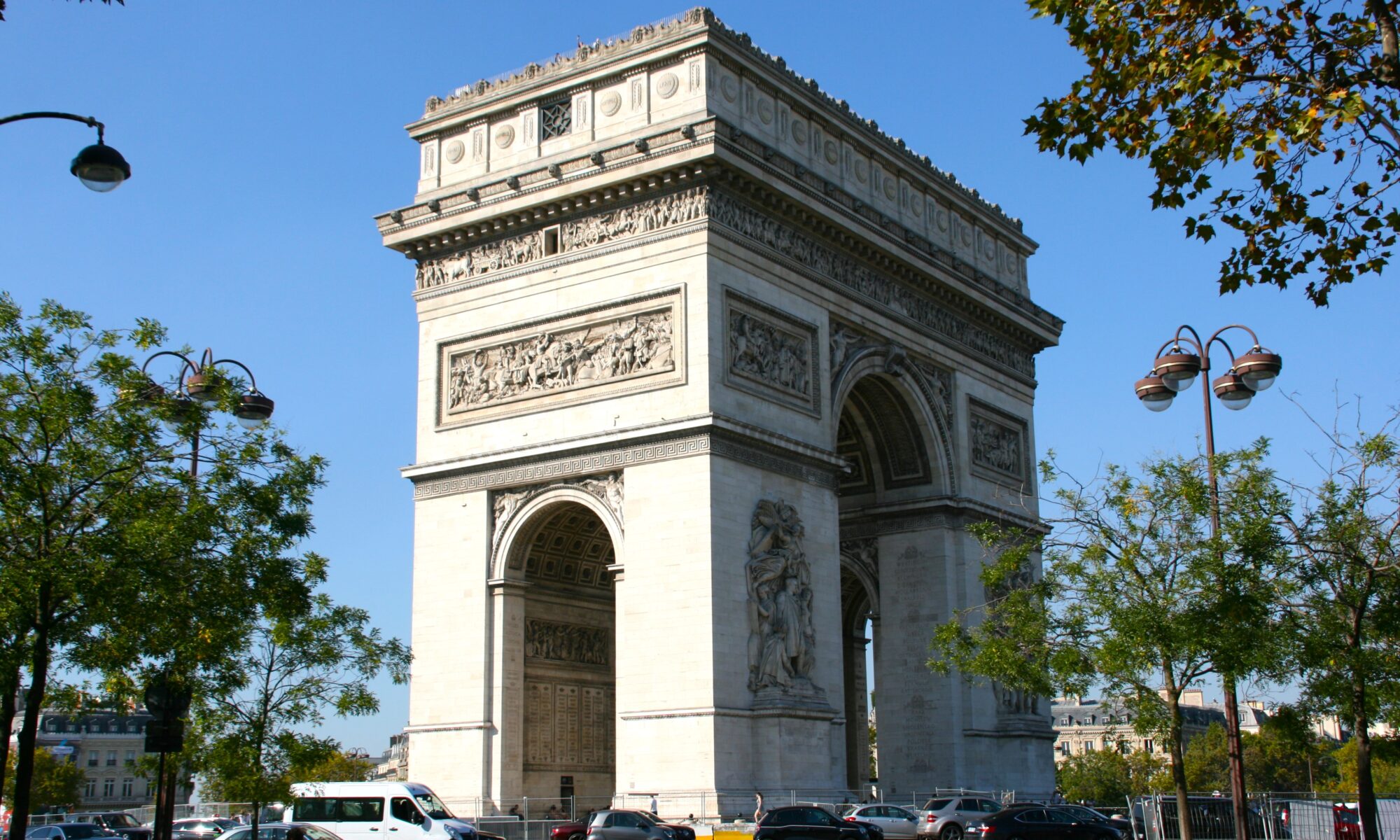
Another famous monument in Paris is the Arc de Triomphe – the most sacred symbol of France – but is it the most monumental of all triumphal arches? I will try to leave my bias for Rome aside for a while. It’s a hard call to make when I haven’t visited all the world’s famous arches. I didn’t realise that there are 4 in Paris alone.
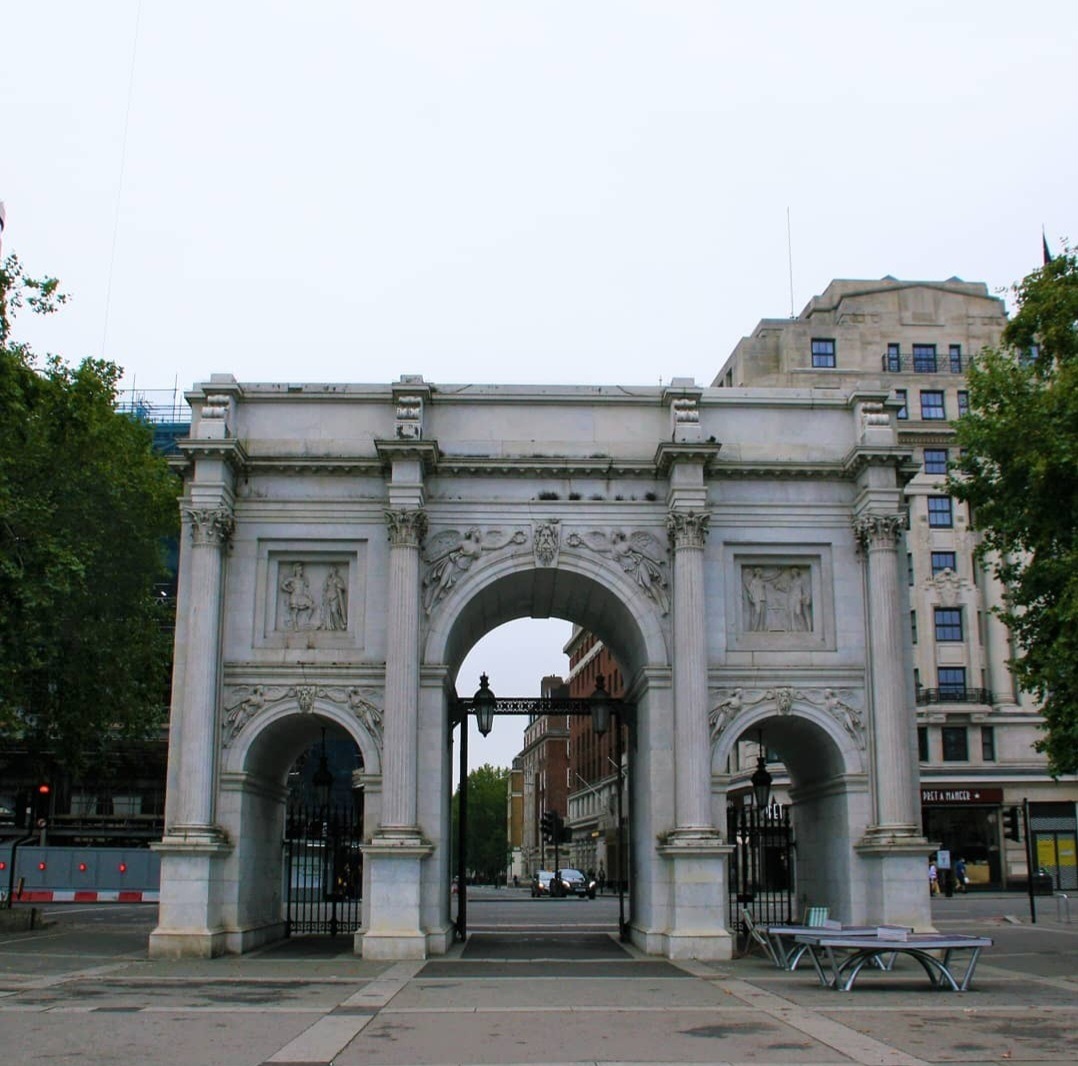
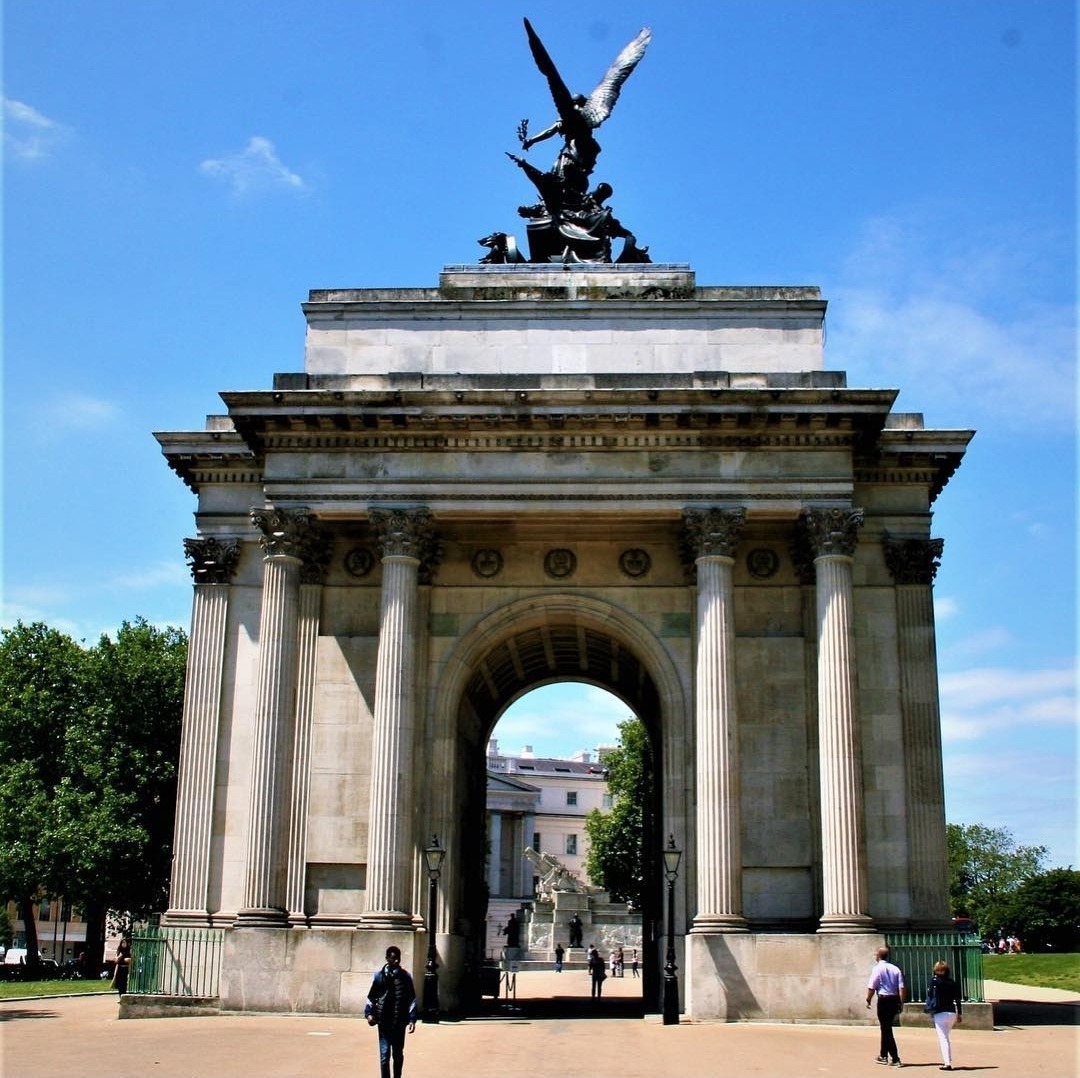
I have walked through the Wellington Arch in London many times but never been up top. The same is true for Admiralty Arch, also in London. I have never seen Brandenburg Gate in Berlin. I have, however, been to Rome and seen the Arches of Constantine, Titus and Septimius Severus. There could be a further debate as to whether the Arc de Triomphe is Paris’ most recognisable monument ahead of the Eiffel Tower, the Louvre, Sacré-Cœur, etc.
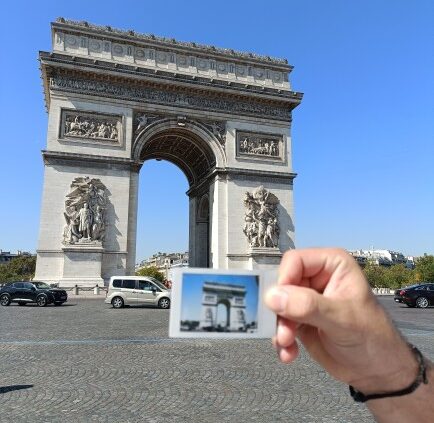
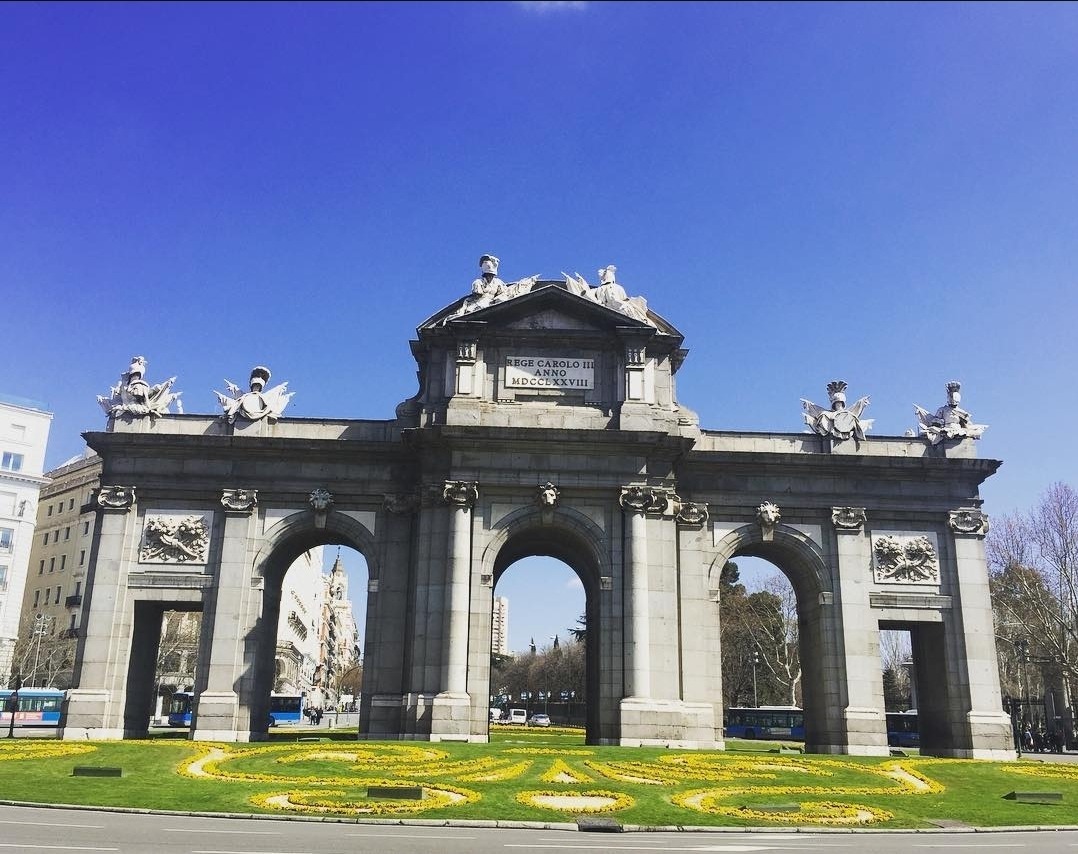
Its origins belong predominantly to the man whose tomb I visited at Hôtel des Invalides – Napoleon Bonaparte I. Napoleon I changed so much of mainland Europe early in the 19th century through his military campaigns and upheaval of government and laws.
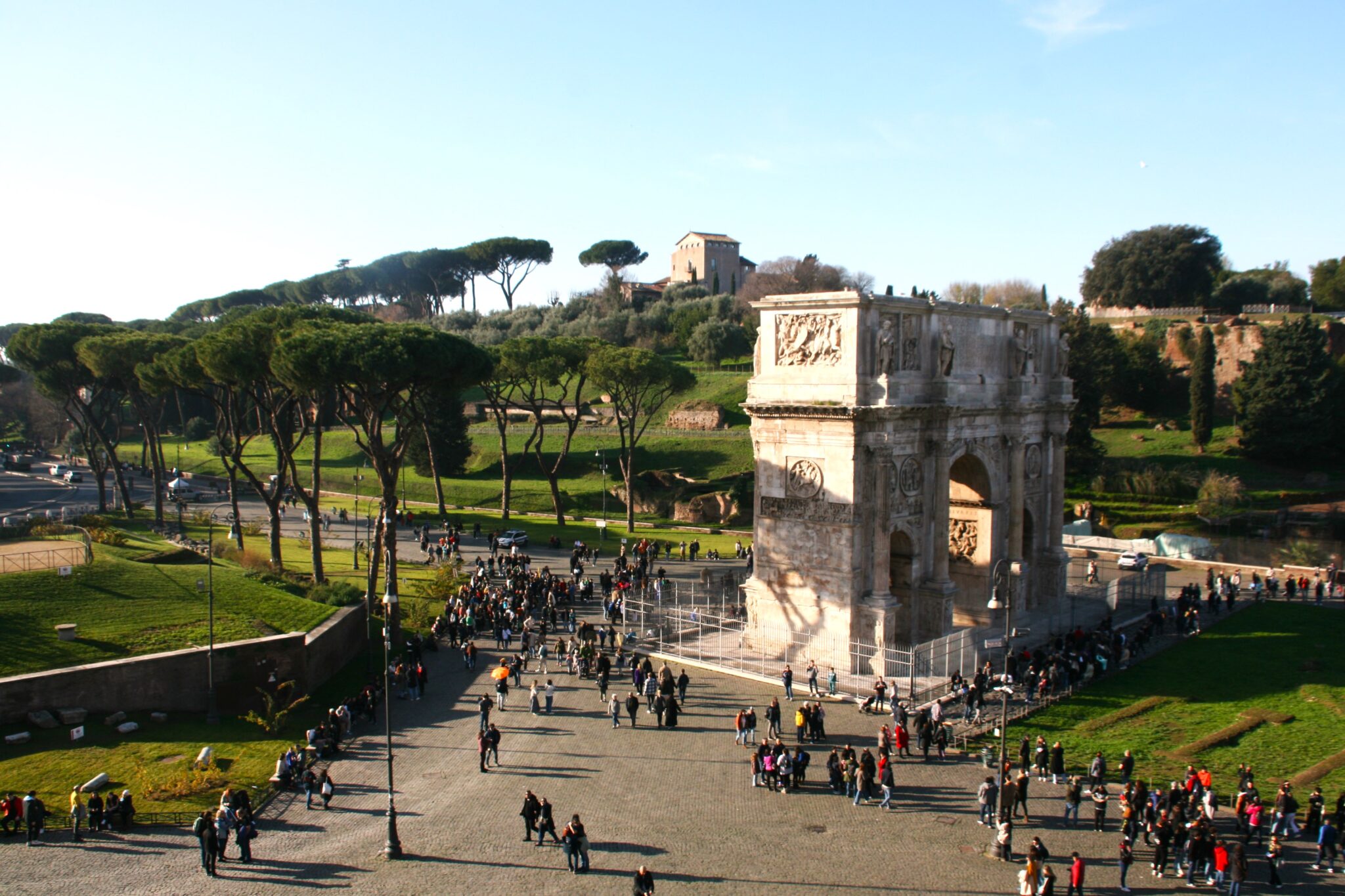
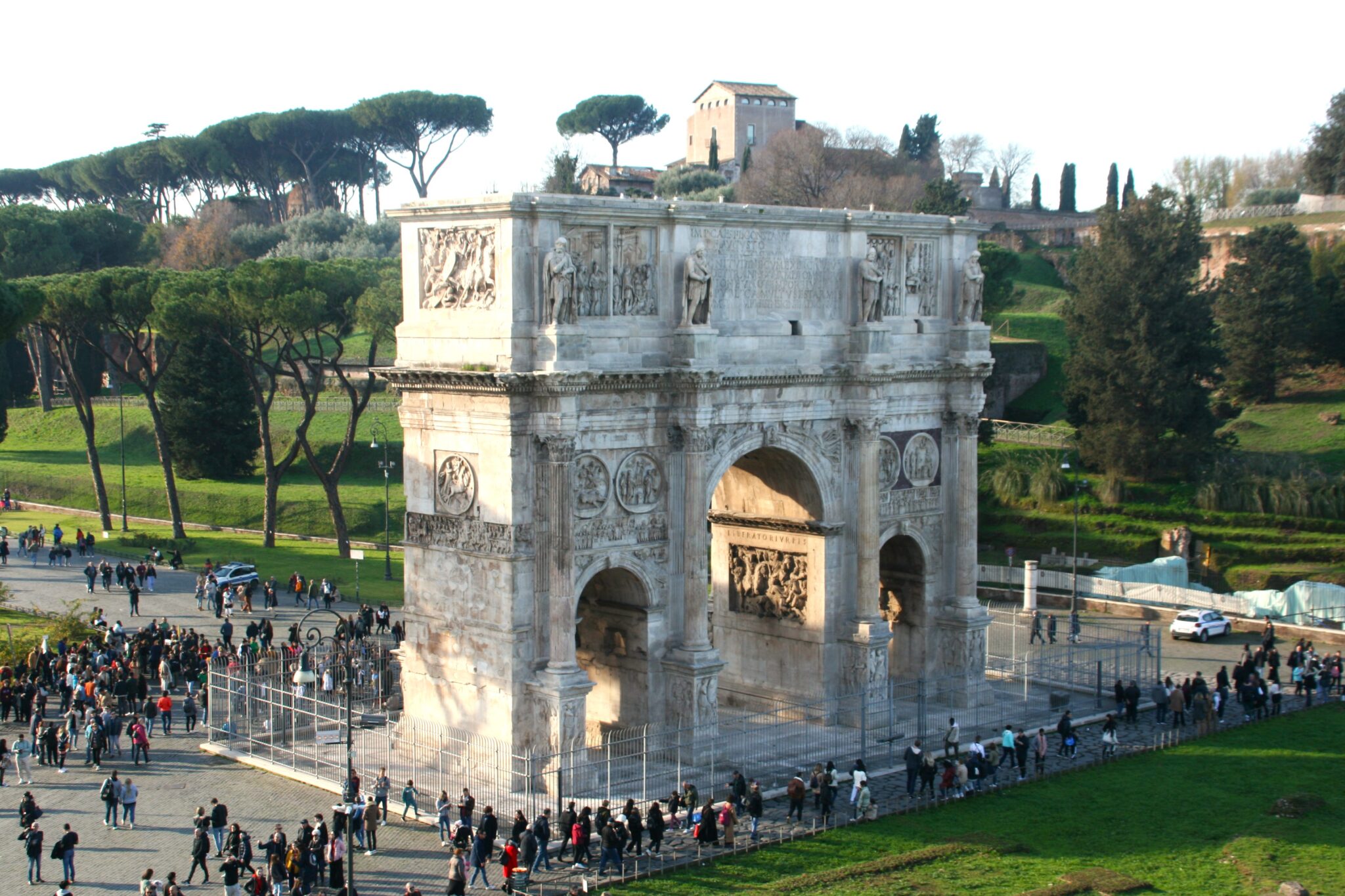
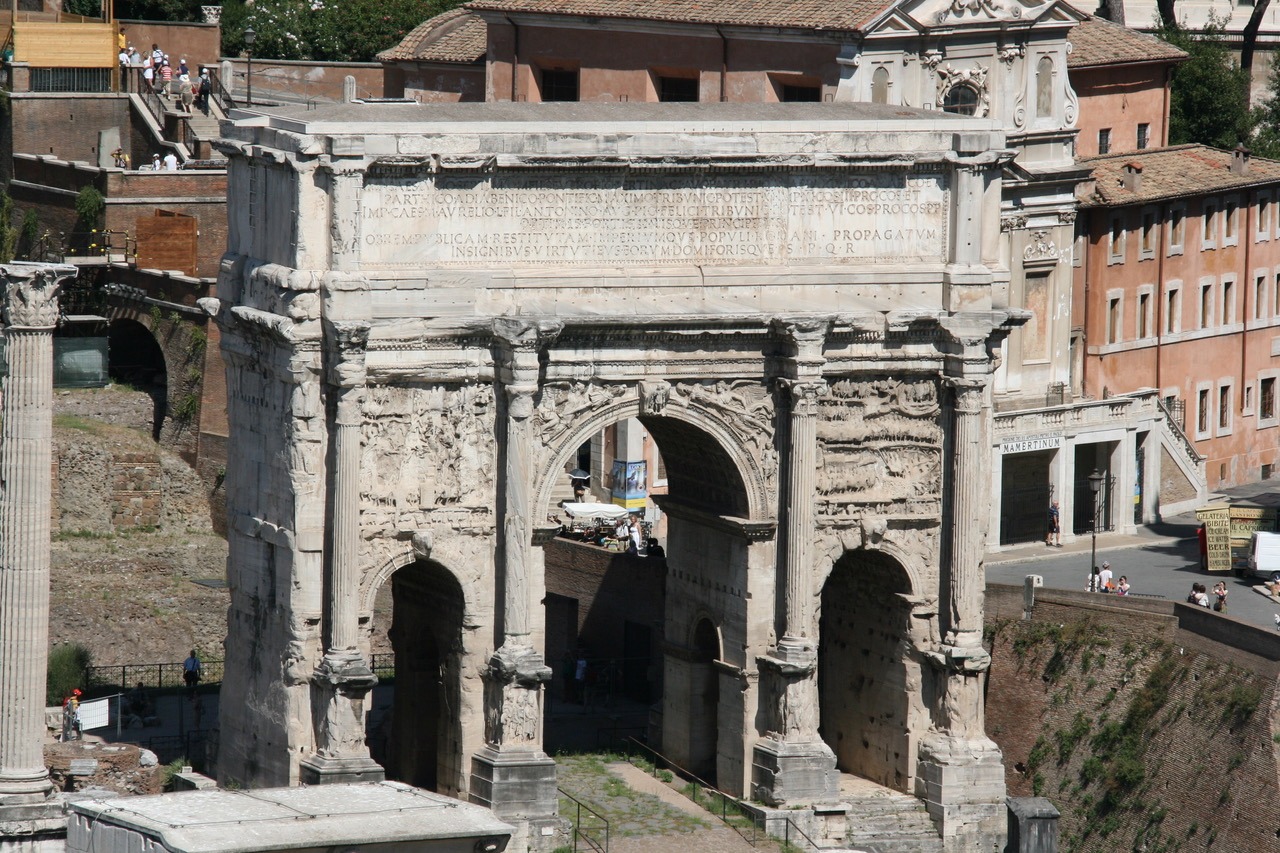
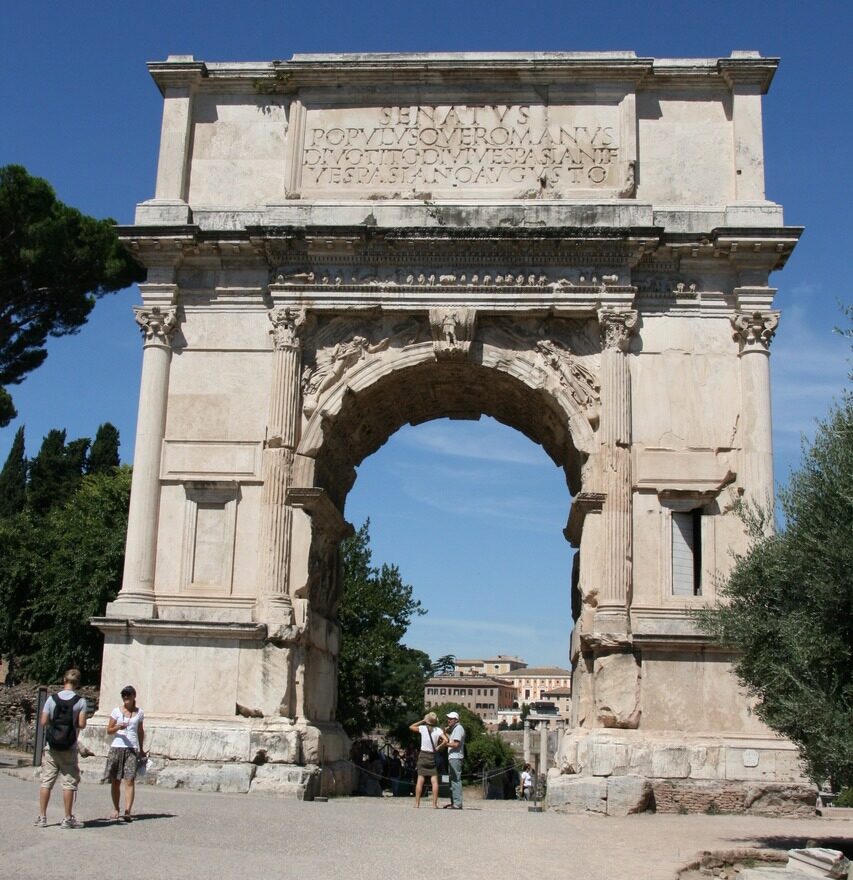
In looking at the evidence of Napoleon I around Paris there seems to be a connection with Rome, an influence by Rome, and almost admiration of Rome. Surely inspiration for the Arc de Triomphe was taken from the Arch of Titus and the other two remaining arches in Rome. The Arch of Titus was designed to glorify the memory of individual emperors and their deeds. Septimius Severus Arch was built to celebrate defeat of the Parthians. The Arch of Constantine was built to commemorate Constantine’s victory over Maxentius.
Napoleon I was head of the greatest army in Europe since Roman times. He was to fight around 80 military campaigns. Shortly after his most famous victory at Austerlitz, Napoleon I commissioned the construction of two arches. The more famous of the two, we call it the Arc de Triomphe, was built to glorify the grand army. The second, the Arc de Triomphe du Carrousel, was dedicated to his victories in the wars of the third and fourth coalitions.
The Arc de Triomphe du Carrousel is not to be confused with the more famous Arc de Triomphe. It is a separate triumphal arch. It is located at the western end of the Louvre and at the eastern end of the Paris historical axis. This is a 9km long, linear route that is sometime called the Triumphal way and runs from the Louvre to the new business district.
The Arc Du Carrousel was built in just two years. The arch is half the size of Arc de Triomphe. One part of its design has eight Corinthian marble columns. On top of the Arc is ‘Peace’ riding in a triumphal chariot. The Arc is plagiaristic of the Arch of Septimius Severus in Rome.
Construction of the towering Arc de Triomphe was a rollercoaster of a journey. A journey that would take around 30 years. This was due to breaks in building due to rise and fall of Napoleon I and the consequent instability that followed the revolution and 1st Empire.
Jean-François Thérèse Chalgrin and Jean-Arnaud Raymond were the chosen original architects. Their plan was inspired by the Arch of Titus with a simple opening as it was to also act as a gateway to the city.
On the 2nd of April 1810 Napoleon I married Marie-Louise of Austria. Part of the planned celebrations was to arrive in Paris through the Arc de Triomphe. But at that time only the footings were complete, so an ephemeral arch was created. This proved to be a very expensive operation, but the real size model allowed Chalgrin to make amendments to his designs.
Chalgrin like Napoleon I would never see the Arc completed. He died on 20th January 1811. After the fall of Napoleon I, building was suspended by King Louis XVIII. The revolution had overthrown the monarchy yet here we were with another monarch of France. Confusing I know, and hard to keep up.
In 1823 Louis XVIII announced that the Arc be completed with a new dedication. Dedicated to his nephew Louis Antoine de Bourbon, Duke of Angouleme. The duke had managed to reinstate the King of Spain (Ferdinand VII) to his throne. France claimed this as their victory with the new dedication of the Arc to ‘Army of the Pyrenees’. When construction resumed, Louis-Robert Goust was associated with another architect, Jean-Nicolas Huyot. They proposed columns be added to the arch a bit like the arch of Septimus Severus in Rome.
After Louis XVIII died his brother (Charles X) came to the throne and continued with his wishes to construct the monument. Huyot was dismissed temporarily for his desire to add the columns to the arch. Charles decided that the original plans of Chalgrin should be respected and completed.
After years of national turmoil, the Arc was completed on 29th July 1836. It had been 30 years in the making and it was dedicated in front of a small gathering of dignitaries.
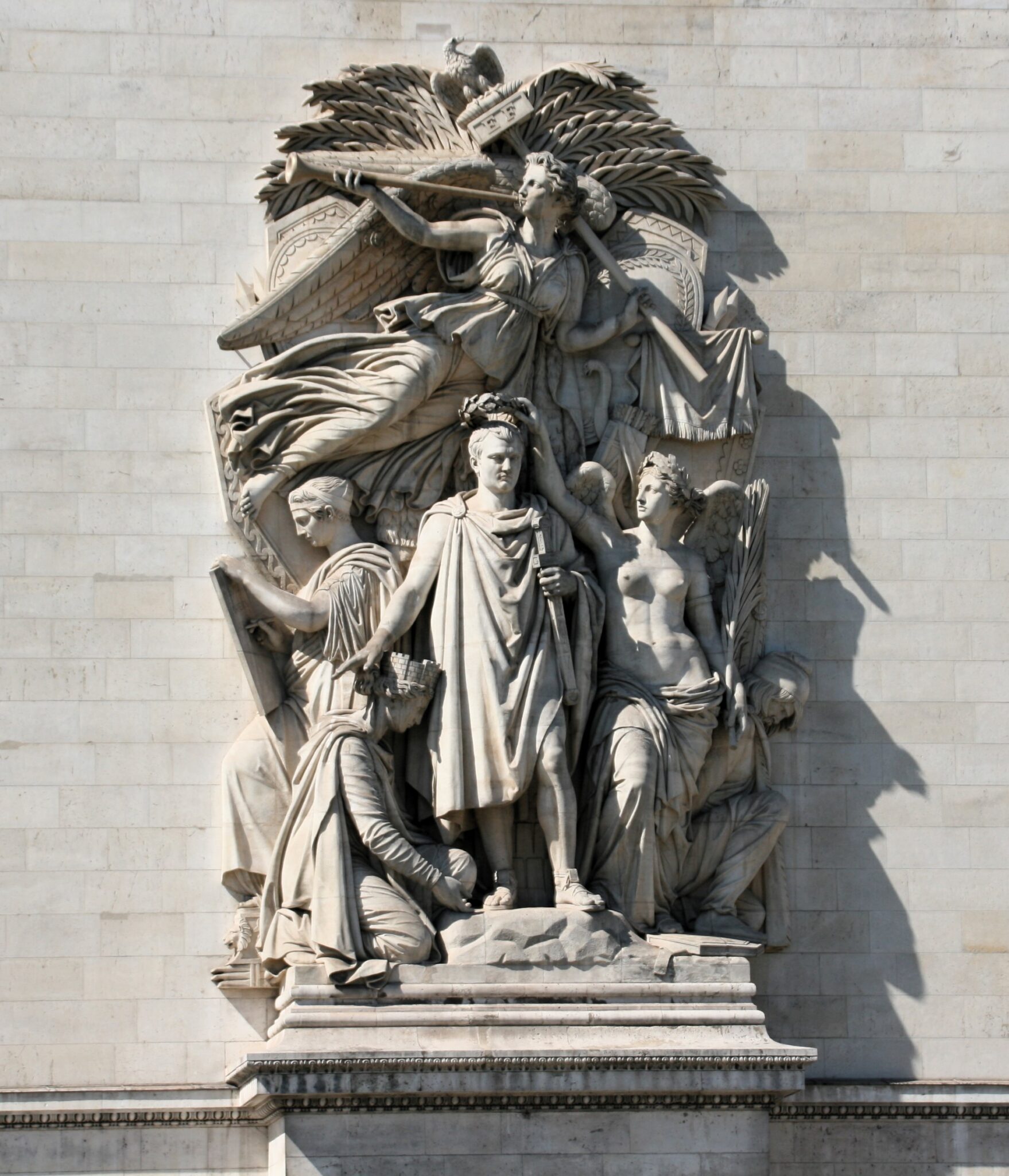
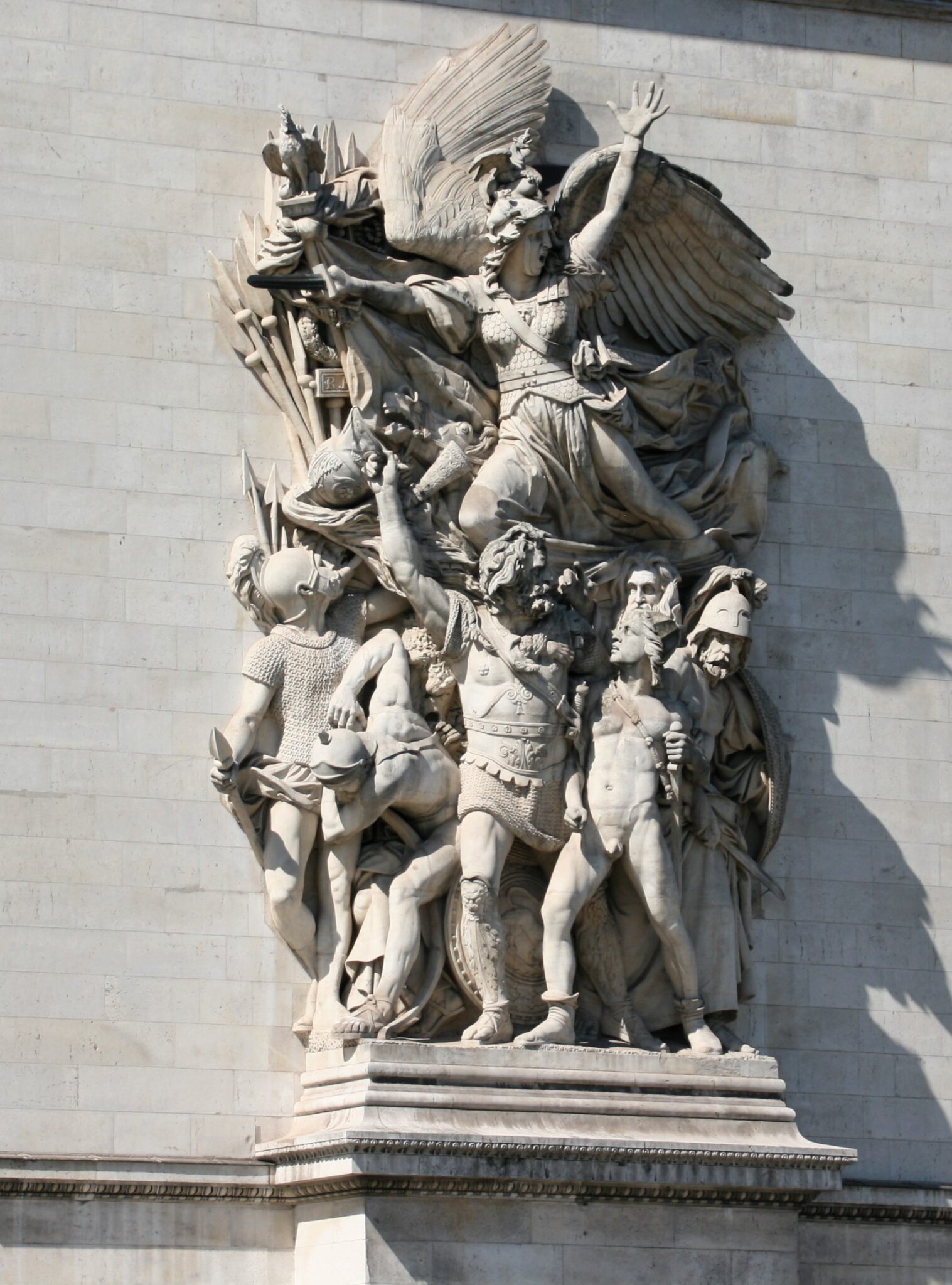
On the 4 pedestals of the Arc de Triomphe are masterpieces of sculpture that depict specific historic events. The most renowned of the sculptures is ‘The departure of the volunteers’ of 1792 (by François Rude) commonly known as ‘La Marsellaise’. The other three include Napoleon I’s Triumph of 1810 (by Jean-Pierre Cortot) which includes him being crowned by the goddess of Victory. The others are the Résistance of 1814 (by Antoine Etex) & Peace of 1815 (Antoine Etex).
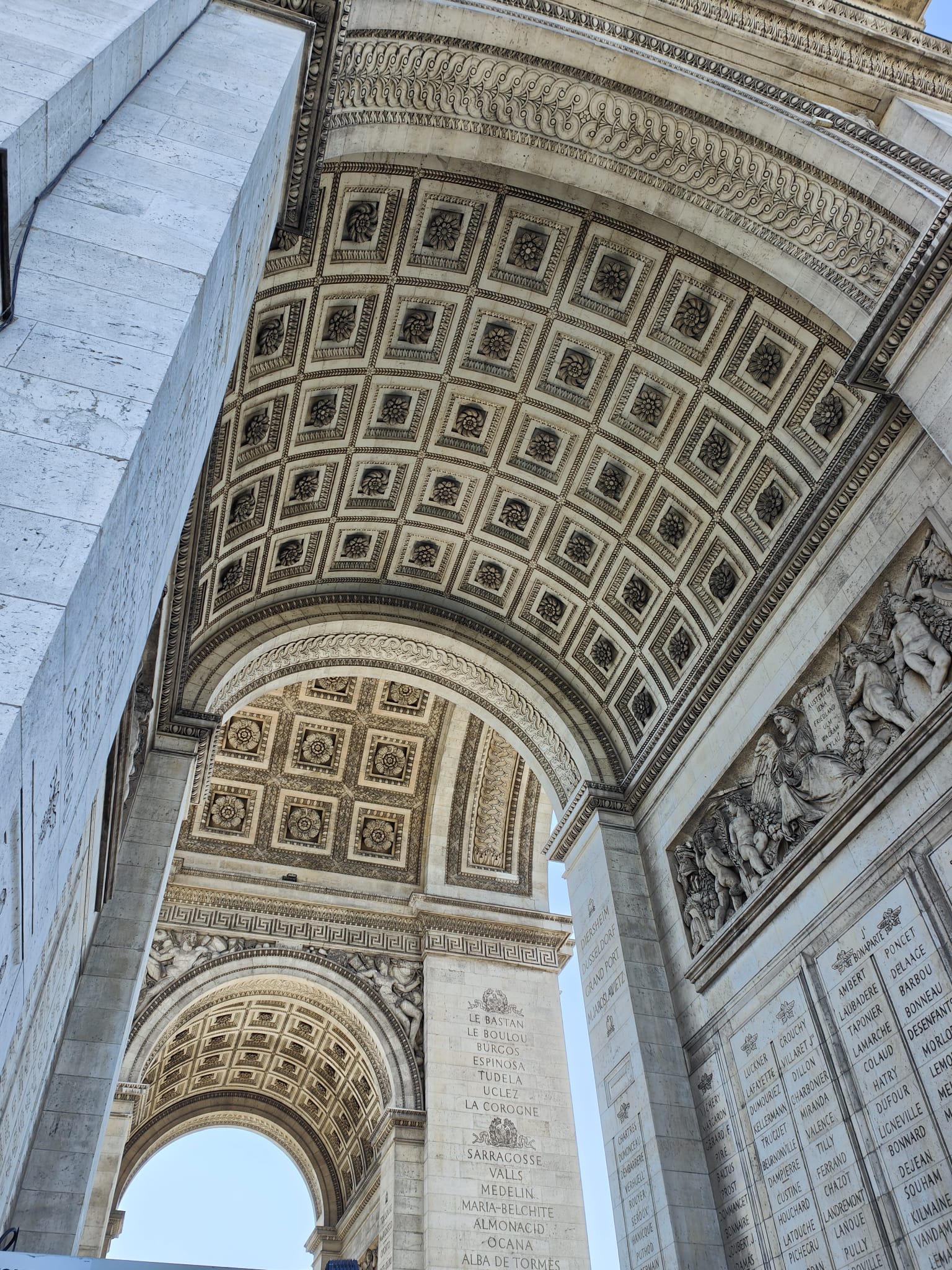
Engraved on the Arc de Triomphe are the names of the locations of famous victories and 660 military leaders. On the facades of the arch are six reliefs representing the moments of the French Revolution and Napoleonic era. The ‘Battle of Aboukir’, The ‘funeral of General Marceau’, The ‘Battle of Jemappes’, The ‘Capture of Alexandria’, The ‘crossing of the Arcole Bridge’ & The ‘Battle of Austerlitz’.
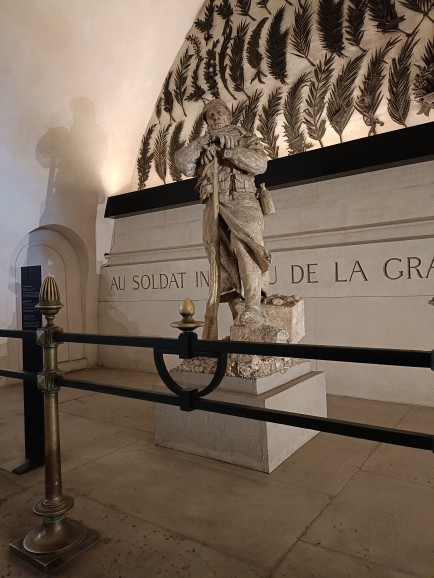
In 1921 the tomb of the unknown soldier was incorporated into the monument beneath the arch. Each day at 18:30 the tomb’s flame is rekindled as a symbol and respect to those who have fallen in the name of France.
Visiting the Arc is a must on a visit to Paris and one that I thoroughly enjoyed. Though surrounded by fast-moving cars, it seemed quieter there than at the Eiffel Tower. Thankfully safe access is provided to the Arc via a tunnel under the roundabout.
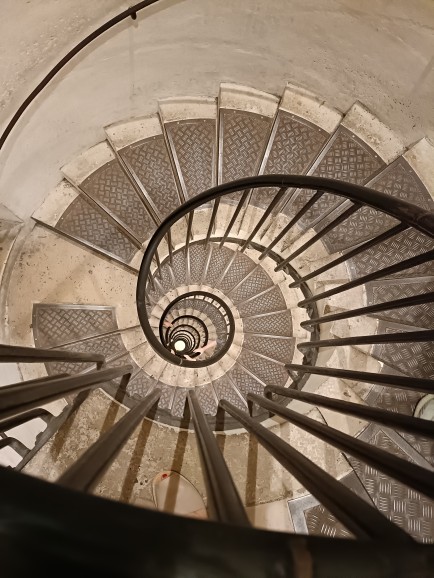
Pre-purchased tickets are essential these days and this meant queues were avoided. Tickets can be purchased from here, currently €22 for an adult. Access to the top is up a winding staircase via a museum on the top floor.
The views at the top are spectacular! Sprawling from the epicentre of Paris is a Parisian panorama. A majestic sight, a blanket of rooftops with iconic monuments standing out from afar. The tree lined avenues add some colour to a rooftop wilderness. Each avenue leads off from each number of the clock face.
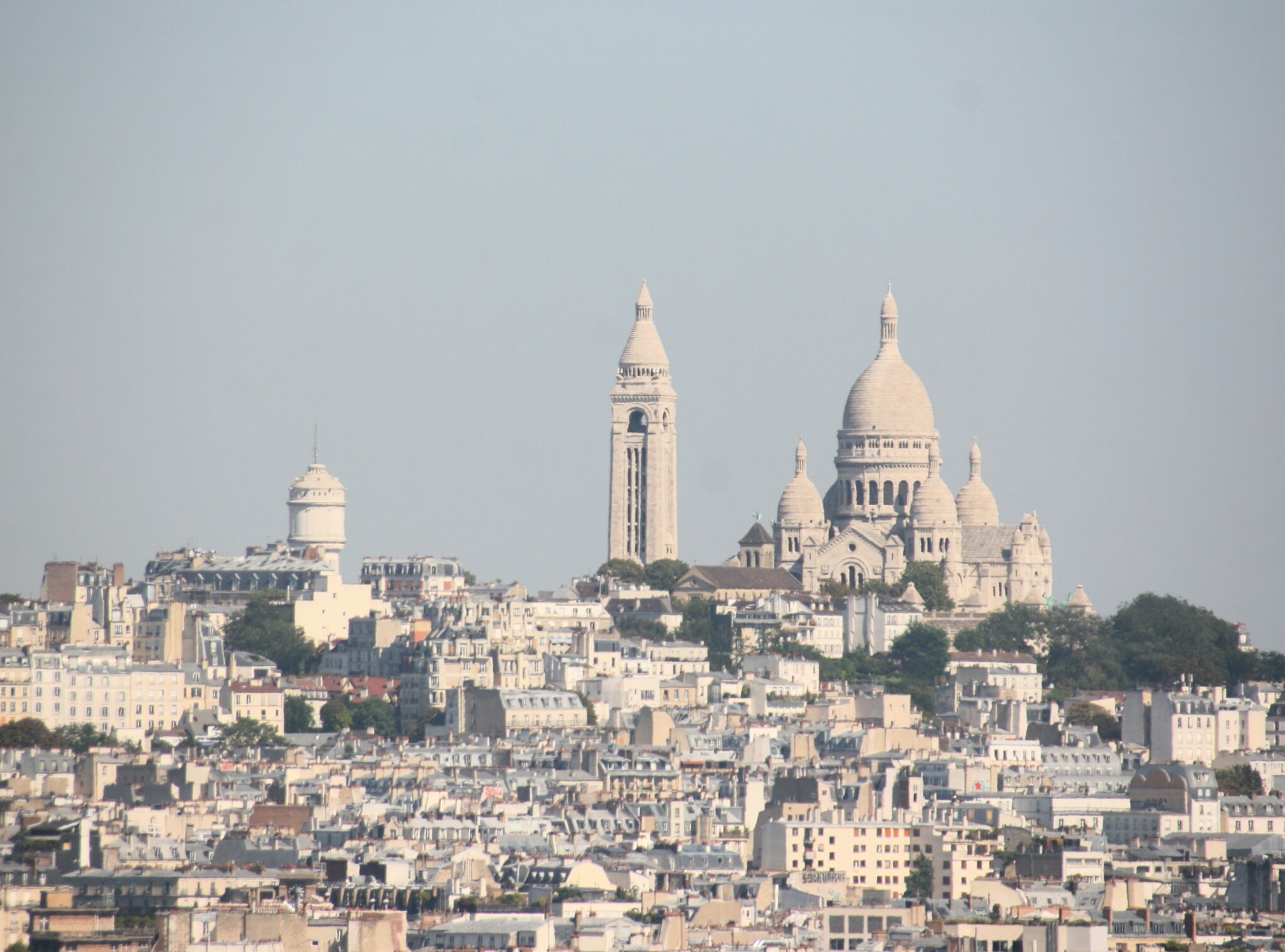
The iconic and bustling Champs-Elysée stretches out to the Louvre. The Eiffel Tower stands like a pinnacle, piercing the skyline. It’s perhaps best viewed from afar. The golden dome of the l’hôtel des Invalides glistens in the bright sunshine. In one direction Sacré-Cœur stands atop Monmarte watching out over the city. In the opposite direction is a collection of modern skyscrapers. It is noticeable that these modern monstrosities have been kept to the outskirts of the city.
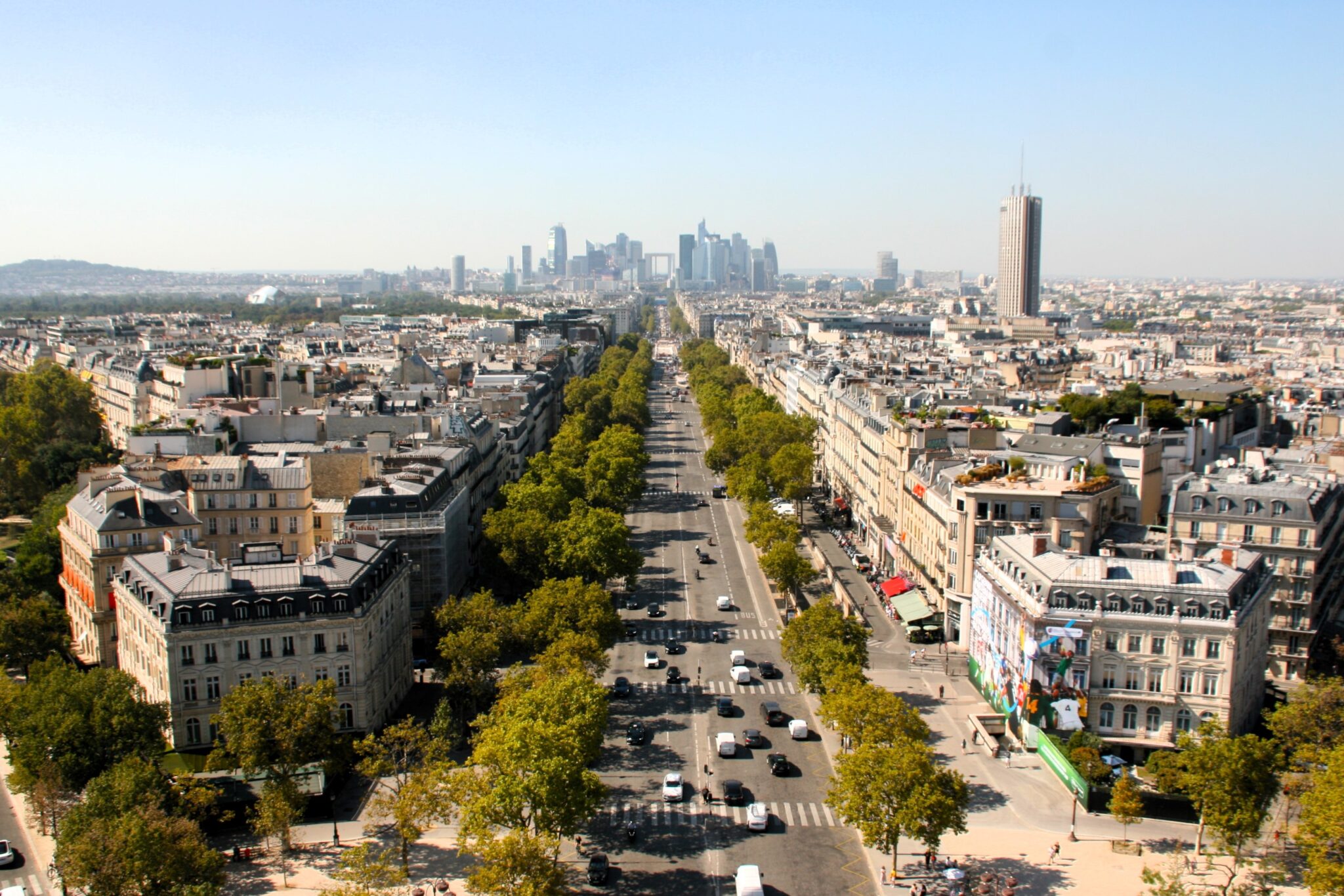
The Arc de Triomphe is famously located at the western end of the Champs-Élysées. It stands proudly in the middle of Place Charles de Gaulle. 12 avenues converge on the Place Charle de Gaulle.
When looking from above, many people refer to it as Arc de Triomphe de L’Etoile (star shape) as the 12 avenues radiate their way away from the roundabout. I take the view of a watch piece, each avenue a number on the face. The towering arch surely makes the site the most famous roundabout in the world.
To aid the debate over the most monumental of all triumphal arches lets view some figures and compare with others. The Arc de Triomphe stands at a height of 50 metres, it is 45 metres wide and 22 metres deep.
In Paris the Arc de Triomphe du Carrousel stands at 19 metres high, 23 metres wide and 7.3m deep.
Wellington Arch in London stands at 18.3m high and 18.3m wide.
Brandenburg gate is 26 metres high, 65.5 metres wide and 11 metres deep.
Our Roman entries include:
The Arch of Titus is only 15.4m metres high, 13.5 metres wide and 4.75 metres deep.
The Septimius Severus Arch is 23m high and 25 metre wide.
The Arch of Constatine is 21 metres high, 25.0 metres wide and 7.4 metres deep.
I hope that I have proved the Arc de Triomphe is the most prominent if not the most monumental of triumphal arches. Its troublesome construction ended with a legacy to the nation. It is an icon not only of Paris but of France itself. Whilst the structure is clearly monumental, I certainly feel it is a copycat of previous incarnations.
The arch’s relatively young age goes to prove how incredible the Romans were at building. I find the appeal of the Roman arches, that have stood the test of time, more appealing. I can’t find an argument for this being the most monumental of all triumphal arches.
Writing about this has stirred memories of Rome and questioned why I still haven’t written about that great city. It has also inspired me to properly visit the Wellington Arch in London. Hopefully I can time this visit correctly with the troops passing under the arch. Inspiration is also there to visit two international sites, a visit to Berlin and see the Brandenberg gate and Austerlitz (Slavkov u Brna town in Cech Republic).
I will leave you with the words of Napoleon I, “You will not return to your homes but through arches of triumph”. As a traveller and visitor to the great city of Paris perhaps the last place on your itinerary should be the Arc de Triomphe. Not as a returning hero of war but leaving a triumphant tourist.