
The San Diego Maritime Museum is a fantastic place to explore if you’re interested in historic ships, naval history and life at sea. Situated along the city’s scenic Embarcadero, the museum brings centuries of seafaring history to life through an impressive collection of historic vessels.
During my visit, I explored the famous Star of India, discovered the movie history of HMS Surprise and ventured into the USS Dolphin submarine. One of the highlights was chatting with the knowledgeable volunteers, who were happy to share the fascinating stories behind the ships.
In this guide, I’ll take you through the vessels worth seeing, practical tips for planning your visit, ticket information, boat trips and nearby attractions to help you make the most of a day in San Diego.
What to See at the San Diego Maritime Museum
There is an impressive collection of boats that form the museum. They consist of the star of the show the ‘Star of India’, the movie star ‘HMS Surprise’, along with others which include USS Dolphin, San Salvador, Berkeley, Pilot, PCF 816 Swift Boat, Medea & Scrimshaw. Each has been beautifully maintained and displayed by a crew of volunteers who were more than happy to show me around and teach me about the boats.
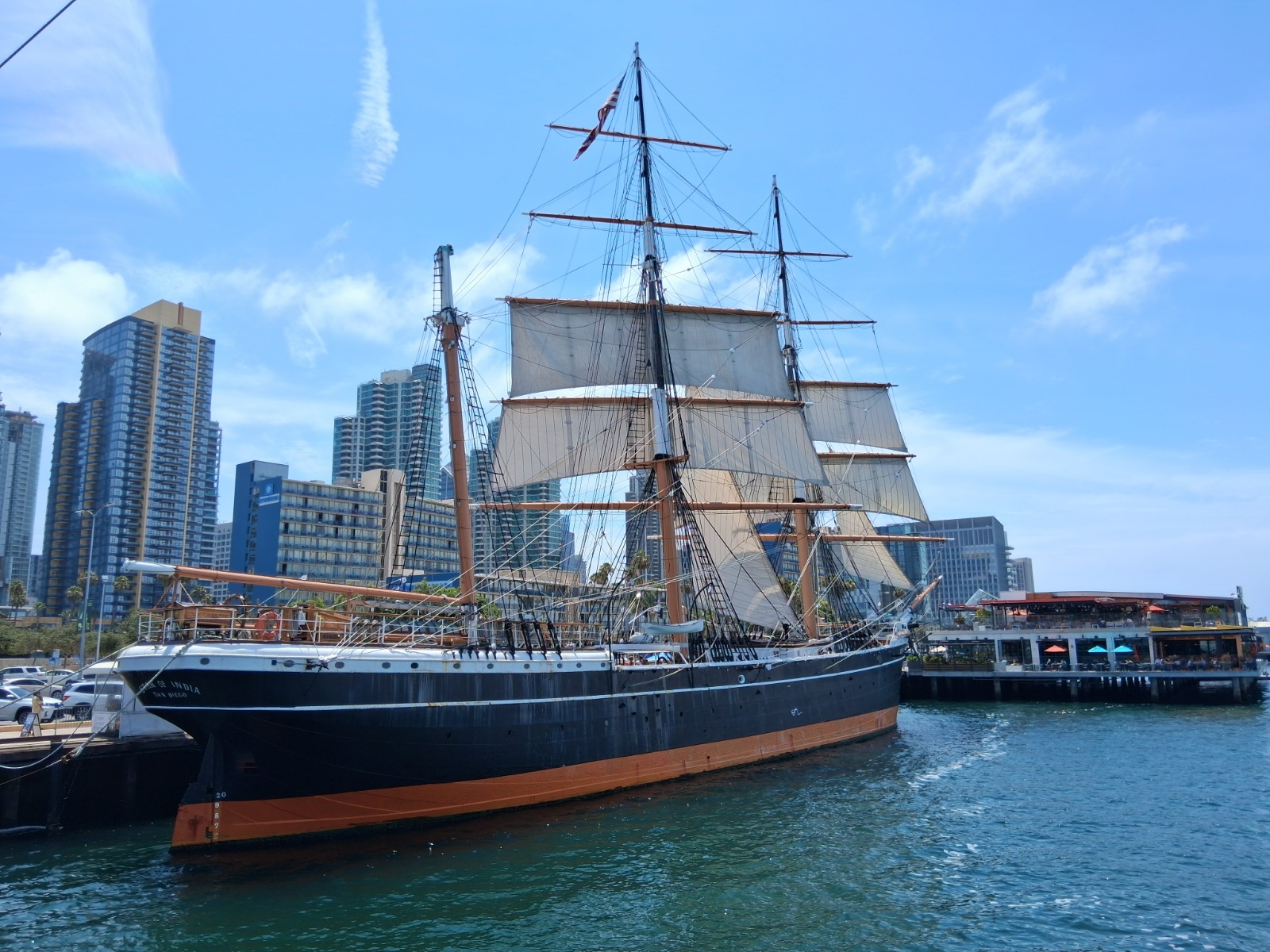
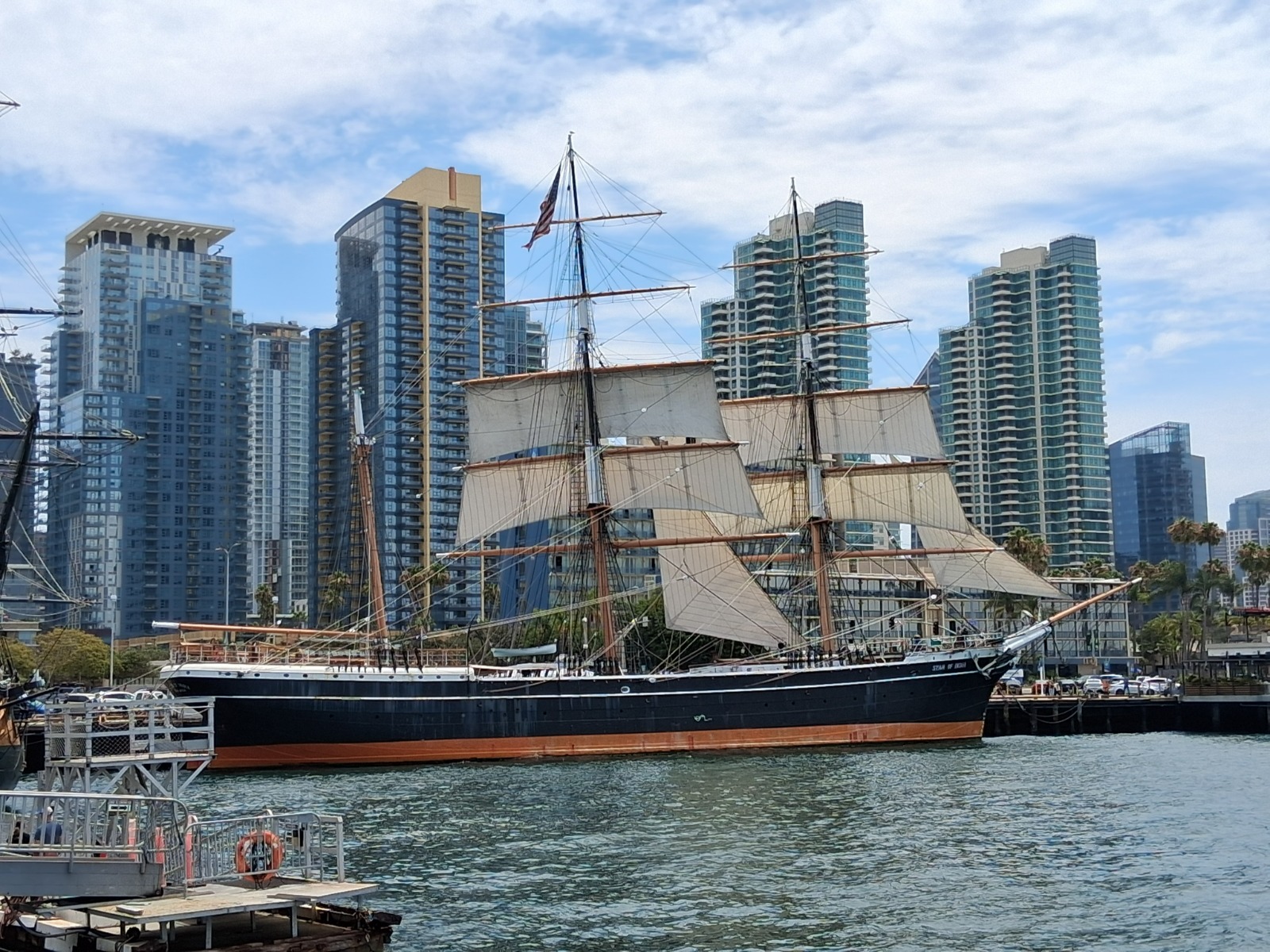
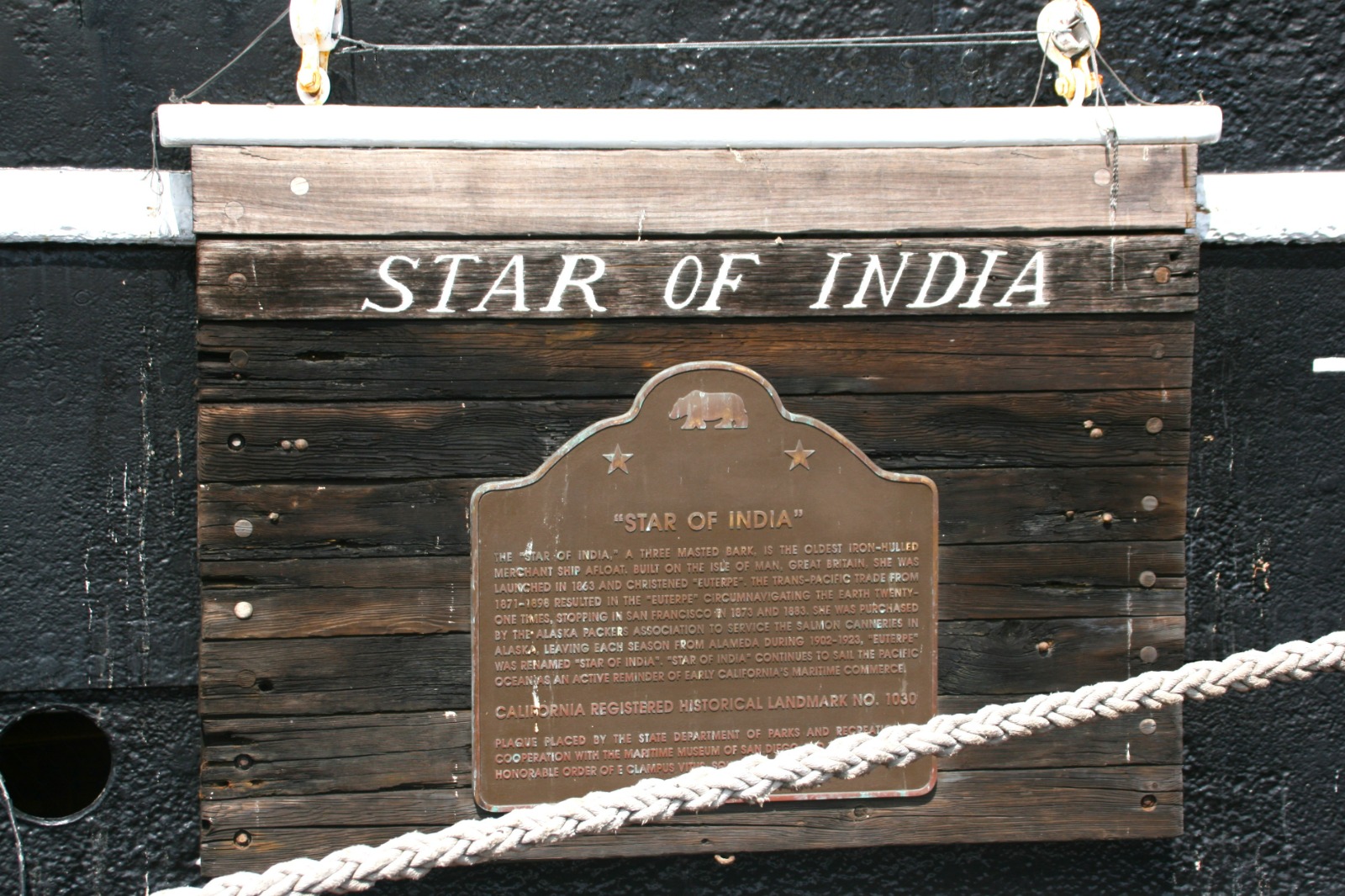
Star of India: The Historic Sailing Ship
Step aboard the star of the show! She is the world’s oldest active sailing ship. Learn about her remarkable career. Remarkably she was built in Britain in 1863, and was an experiment of sorts when built incorporating a change to an iron hull from the traditional wooden one.
I was informed by the gentleman aboard that she would go on to sail around the globe a remarkable 21 times as well as getting trapped in ice in Alaska and coming aground in Hawaii. The ‘Star of India’ was originally named Euterpe, after the Greek muse of music and poetry.
She began life as a cargo trade ship working a route between England and India. On her first trip to India, she suffered a collision and a munity. On her second trip she was caught in a cyclone in the Bay of Bengal. After 4 more trips to India, she was purchased by Shaw Savill of London in 1871.
In the 2nd chapter of her career, she embarked on trips hauling emigrants to New Zealand for around 25 years. Sometimes stops were made in Australia, California and Chile as well. She was sold after 25 years’ service and completed a few trips between the Pacific Northwest, Australia and Hawaii. Her final act of service came when she was sold (1901) to the Alaska Packers’ Association and hauled salmon.
She was retired in 1923 after 22 Alaskan voyages when steam ruled the seas. The ship was left to rot and decay in San Diego harbour. She was saved when a passing author inspired the restoration of the ship. Progress was slow but she finally set sail again in 1976 before finding her home at the maritime museum of San Diego.
HMS Surprise: The Movie Star Ship
She was consistently referred to as the ‘Movie Star’ by volunteers as I visited. I had rather hoped that I had seen her in Hornblower, one of my favourite TV shows but sadly not. HMS Surprise lived two very different lives. She was originally built in 1970 as HMS Rose. She was designed as a replica of an 18th century Royal Navy Frigate. In the first half of her life, she spent decades as a sail training vessel and attraction.
In the second half of her life, she made it to the big screen. Not once but twice. Her change in fortunes came when she was purchased by 20th Century Fox film studio in March 2001. This brought about a transformative change.
She was extensively modified to become a 24-gun frigate from Great Britain’s Nelson-era Royal Navy – HMS Surprise in Russell Crowe’s Master and Commander.
After her first movie success the ship was picked up by the maritime museum of San Diego which lovingly restored her so she could sail again. After the success in her first movie appearance, she picked up a second movie appearance in 2010. HMS Surprise appeared as HMS Providence in Disney’s ‘Pirates of the Caribbean’: On Stranger Tides.
For all her movie success the ship is heading into the sunset with the news that she has become financially unviable. Sad to hear, but lucky enough to have seen her before she retires. For those wanting to view her, you only have till 31st July 2027 to witness her. The museum plans to honour and celebrate the ship’s legacy over the next 12 months.
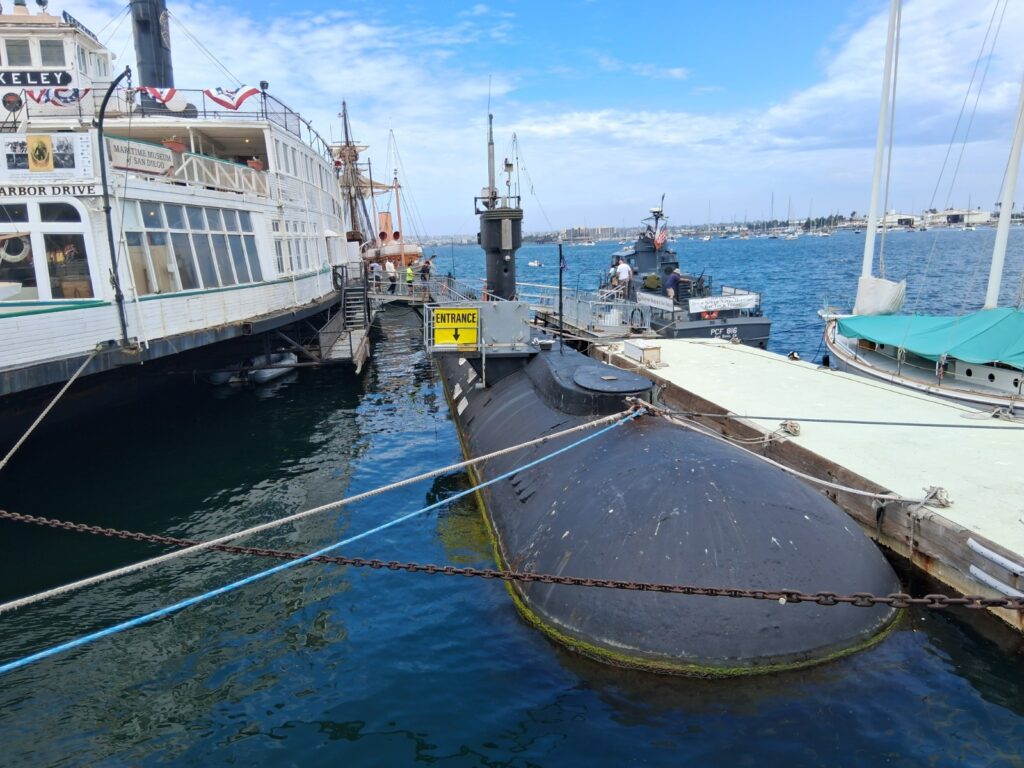
USS Dolphin: Exploring a Research Submarine
The USS Dolphin was decommissioned in 2007 after 37 years’ service. A claustrophobic visit will show you the deepest-diving submarine in history. She reached incredible depths of over 3,000 feet and in 1969 launched a torpedo from the deepest depth ever recorded.
She was designed as a research and development vessel, playing a critical role in advancing undersea technology, contributing to breakthroughs in sonar systems, submarine-to-aircraft communication, and non-acoustic anti-submarine warfare.
During her years of service, she suffered an emergency fire and flooding incident in 2002. She survived and returned to service. Her years of service led to her being the longest-serving diesel-electric submarine in U.S. Naval history.
San Salvador and California's Maritime History
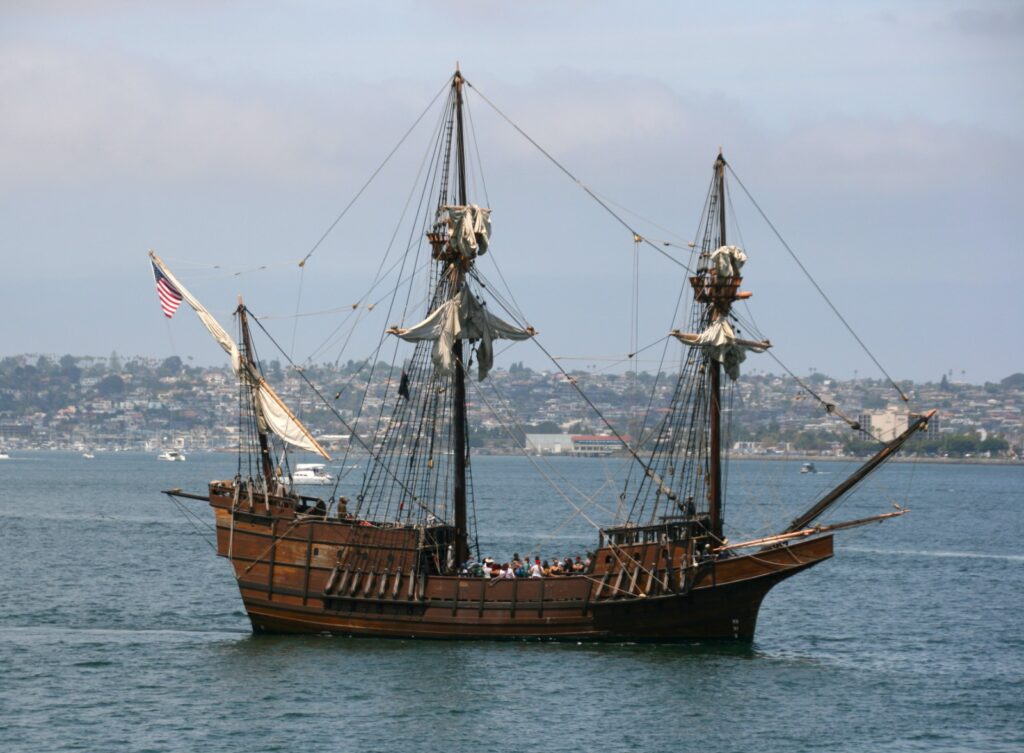
The San Salvador is a replica of the first European vessel to reach America’s West Coast. I will learn a lot more about Juan Rodriguez Cabrillo when I visit Point Loma. So, for now, a brief snapshot of San Salvador – she was under the command of Juan Rodriguez Cabrillo when he arrived in San Diego on 28th September 1542. After arriving he headed north surveying the Californian coast and shoreline.
The iconic status and historical importance of San Salvador led the Maritime Museum of San Diego to construct a replica of the ship. Extensive research was completed to form an accurate representation of Cabrillo’s flagship.
As seen on my visit today the ship will regularly be seen sailing around the San Diego Harbour, as she is used for educational and inspirational purposes. Time your visit right and you may witness the firing of its cannons.
Californian
The ‘Californian’ was built in San Diego Bay in 1984 for the Los Angeles Olympics. In 2003 she was designated the ‘tall ship of the State of California’. She is a replica of the 1847 Revenue Cutter C.W. Lawrence that once patrolled the California coast enforcing federal law during the Gold Rush. In 1915 the Revenue Cutter Service and 4 other maritime agencies merged to form the United States Coast Guard.
The Californian came to the Maritime Museum of San Diego as a result of the generosity of the Hughes and Sheila Potiker Family Foundation in 2002. A major restoration took place the following year made possible through a grant from the Californian Coastal Conservancy.
The ship is regularly sailed offering members of the public ½ and full day voyages. When not sailing it offers a dockside exhibit.
Berkeley and the Swift Boat
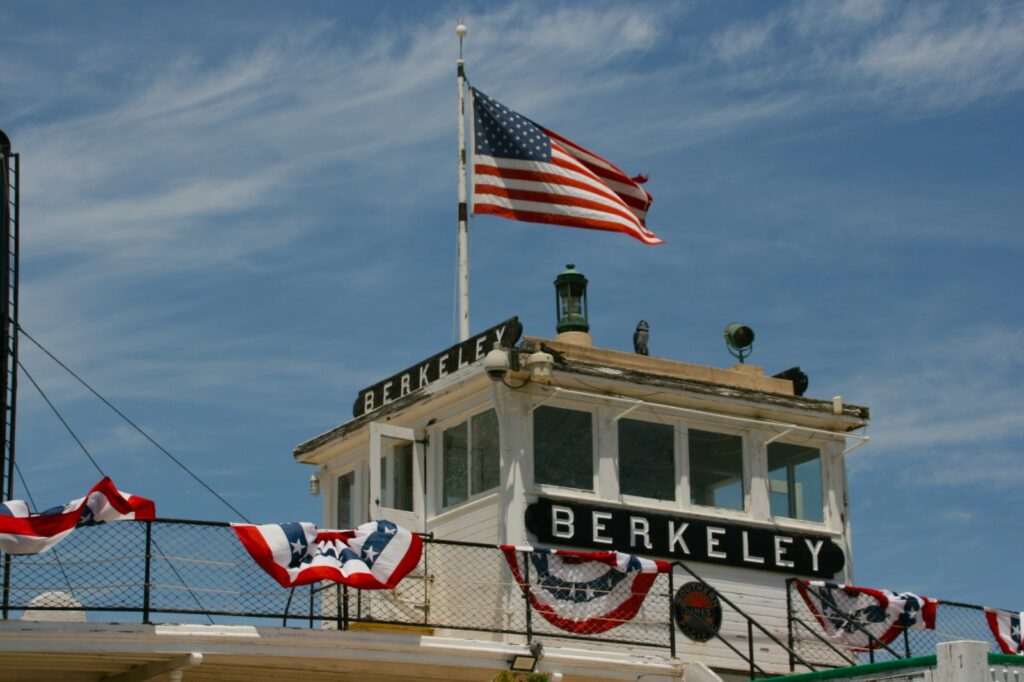
The heart of the museum operations is based on this former steam ferry. Built in 1898 by the Union Iron Works she was the first propeller-driven ferry on the west coast. Apparently difficult to steer, she earned the nickname “Pile Drivers’ Friend”.
Berkeley was the largest ferry in the US at the time and could carry around 1,700 passengers. Her working life was spent in the San Francisco Bay area. Her working life was around 60 years before the Maritime Museum acquired her in 1973.
In 1906 she played a heroic role in the aftermath of the 1906 San Francisco earthquake as she ferried thousands of survivors to safety. The main hub of the museum now houses a shop, offices, maritime research library and model workshop.
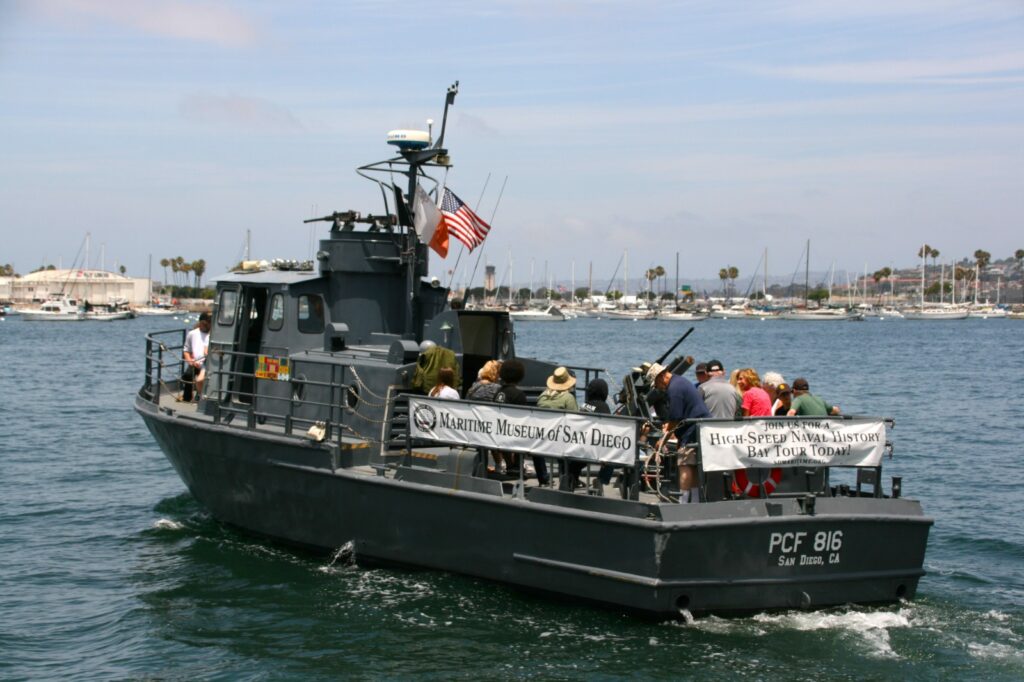
This is a Vietnam-era Patrol Craft Fast (PCF) primarily used to offer visitors a tour of the harbour. It uses two V12 engines which deliver 980 horsepower to transport visitors around the bay.
Used during the Vietnam war, they were often referred to as Swift boats. In 1971 the US Navy donated two Swift boats to the newly formed republic of Malta’s maritime squadron.
They worked in Malta for 40 years before retirement. One was donated to the Maritime Museum of San Diego with the proviso that it would preserve her history and pay tribute to all Swift sailors from both countries.
Tickets, Opening Times and How to Get There
To help you plan your trip smoothly, here is everything you need to know before visiting this museum in San Diego harbour.
Opening times: The maritime museum of San Diego is open daily between the hours of 10:00 AM and 05:00 PM. Last entry is 1 hour before closing.
Prices: Adults ticket – $28.00. Military & Senior – $20.00 Youth (6 – 17years) – $15.00 Children (5 and under) – $5.00.
Getting here: Located on Harbour Drive near the corner of Ash Street. It is a few blocks west of Interstate 5. From I-5 North or South, take the “Airport” exit, then follow signs for “Embarcadero – Maritime Museum” to reach the museum. For those arriving by train then the Santa Fe train station is a short walk away. For those on the trolley then the best stop is ‘Little Italy’.
The museum is located at 1492 North Harbor Drive, San Diego, CA 92101
Parking: There is no onsite car parking. Close to the museum is 3 hour maximum parking which is metered. For those wanting to stay longer then consider using some of the nearby car parks.
Accessibility: Historic sailing ships, submarines, and multi-level decks feature steep stairs, narrow hatches, and uneven surfaces that restrict full mobility device access. Access to the Berkeley is assisted with a lift.
Dogs: Only service dogs are allowed to visit.
Duration: Allow yourself between 2-4 hours to explore all the boats and museums. Don’t forget to talk to the volunteers who are more than happy to engage. Add a little extra time if you plan to take an option to tour the harbour. Your ticket is valid for the whole day so you can leave and come back again as many times as you want.
Boat Tours and Sailing Experiences
The museum offers a wide range of thrilling adventures on the water. Perhaps the best way to view the historic vessels is to witness them in action. Tickets can be purchased on arrival or pre-booked and will include entrance fees to the museum.
Adventures include a historic bay cruise on a 1914 pilot boat or a naval military history tour aboard Swift boat PCF-816. Sailing adventures are offered through a tall ship adventure aboard the schooner California or San Salvador Sailing adventure. The museum is now offering an interactive Pirate show aboard the San Salvador.
Tips for Visiting the Museum
Here are a few practical tips to help you out when visiting the Maritime Museum of San Diego
Wear comfortable shoes: You will be climbing steep, ladder-like stairs, stepping over high thresholds, and walking on moving decks. High heels and flip-flops are not recommended.
Suitable clothing: Wear pants, jeans, or shorts: Avoid dresses or skirts. You will be climbing steep, ladder-like stairs where people below can easily see up, and you will need to bend and stride over high barriers.
Watch your head: Historic ships and submarines were built for utility, not comfort. Keep an eye out for low ceilings and tight entryways.
Check the event calendar: The museum frequently hosts pirate-themed family days, sea shanty concerts, and twilight dinner cruises. (link to website page)
Sun and element protection: Make sure you bring a hat, sunglasses and sunscreen. Most of the museum is outdoors on unshaded wooden decks. For those travelling around the harbour beware of gusty winds that may blow hats off.
Things to Do Near the San Diego Maritime Museum
Here is a look at what to do nearby to ensure a full day out. Why not visit the USS Midway museum to ensure a full educational military and naval day out then visit either Seaport village or Little Italy for food and refreshments?
USS Midway Museum
After a short, 15min, walk along the Embarcadero you will find the towering USS Midway museum, an historical naval aircraft carrier museum. Visiting at the same time gives the perfect naval military combination. Explore an extensive display of aircraft and learn about life at sea aboard this floating vessel.
Seaport Village
Seaport village is a waterfront complex brimming with shops, restaurants and galleries. It is perhaps the perfect place to relax after an educational day visiting the Maritime Museum. The village is a little further along the Embarcadero after USS midway museum.
Little Italy
Looking for something away from the water’s edge? Little Italy is the perfect place to go. A chic, vibrant and pedestrian-friendly neighbourhood it is packed with restaurants, trendy cocktail bars, brewpubs and bustling patios. It even has an English bar! For those visiting on a Saturday or Wednesday then don’t miss out on the farmer’s market.
Waterfront Park
Sandwiched between Little Italy and the museum piers is the Waterfront Park. It is the ideal spot to allow the kids to burn off any extra energy they may still have. There is a massive interactive splash fountain, grassy lawns and playground structures.
Is the San Diego Maritime Museum Worth Visiting?
A visit to the Maritime Museum of San Diego offers an unmatched look into seafaring history. After visiting the Cutty Sark it is a great reminder and always enjoyable to see where Britain’s history reached. The ‘Star of India’ display’s the rich and powerful history of the British isles.
A visit to the museum is well worth the entrance fee and provides not only a great day out but a fully educational one. The volunteers aboard are friendly and approachable and willing and enthusiastic to engage in conversation.
So, what’s stopping you from visiting? Book your tickets online today on the official Maritime Museum of San Diego website to secure your spot and start planning your ultimate maritime adventure! Remember you only have less than a year to see the movie star HMS Surprise!
Frequently Asked Questions About the Maritime Museum of San Diego
Is the Maritime Museum of San Diego worth visiting?
Absolutely! The Maritime Museum of San Diego is a great day out for anyone interested in ships, naval history and life at sea. You can explore historic sailing ships, step aboard a Cold War-era submarine and learn about centuries of seafaring history. The knowledgeable volunteers are also happy to share fascinating stories about the vessels.
How long do you need at the Maritime Museum of San Diego?
I’d recommend allowing around 2–4 hours to explore the historic ships and exhibits. If you plan to take a harbour cruise or enjoy one of the sailing experiences, allow some extra time. Your admission ticket may also allow you to leave and return on the same day, so check the current ticket conditions before visiting.
What ships can you see at the Maritime Museum of San Diego?
The museum has an impressive collection of historic vessels, including the Star of India, HMS Surprise, the USS Dolphin submarine, the San Salvador, the Californian, the Berkeley and the PCF 816 Swift Boat. Each vessel has its own fascinating history, from international sailing voyages to military service and Hollywood film appearances.
How much are tickets to the Maritime Museum of San Diego?
Ticket prices depend on the admission type and may change. The museum’s published walk-up prices are $28 for adults, $20 for military personnel and seniors aged 62 and over, $15 for young people aged 6–17, and free for children aged five and under. Online tickets may include additional fees, so check the official ticket information before your visit.
What are the opening hours of the Maritime Museum of San Diego?
The museum’s published opening hours are daily from 10 am to 5 pm, with the entry gate closing at 4 pm. I’d recommend checking the official museum website before travelling, as opening arrangements can change.
Can you visit HMS Surprise at the Maritime Museum of San Diego?
Yes. HMS Surprise, famous for its appearance in Master and Commander: The Far Side of the World and Pirates of the Caribbean: On Stranger Tides, remains open to visitors through 31 July 2027. The museum has announced that it will close to visitors permanently on 1 August 2027. If you’d like to see this famous movie ship, plan your visit before the closure and check the museum’s website for the latest arrangements.