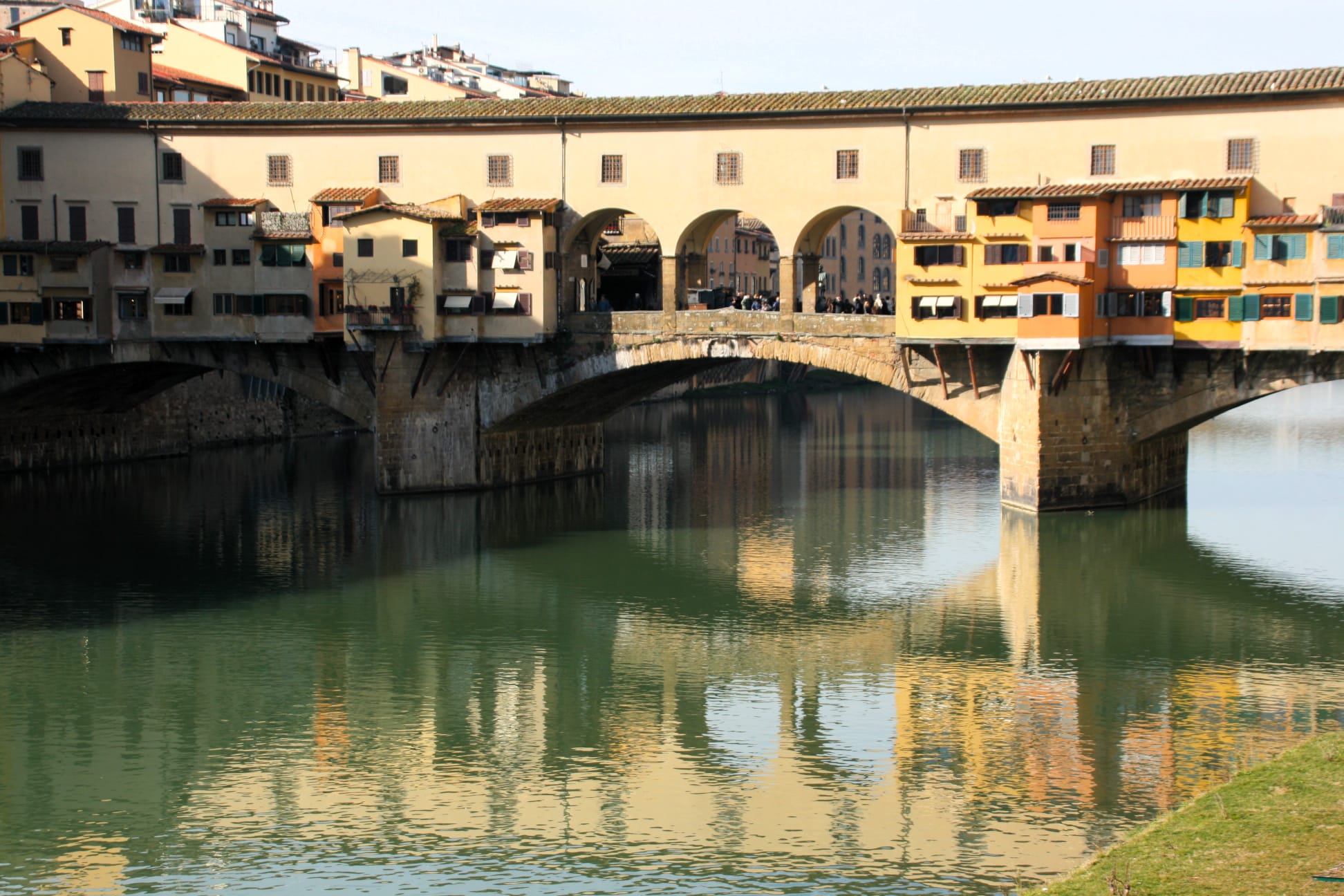
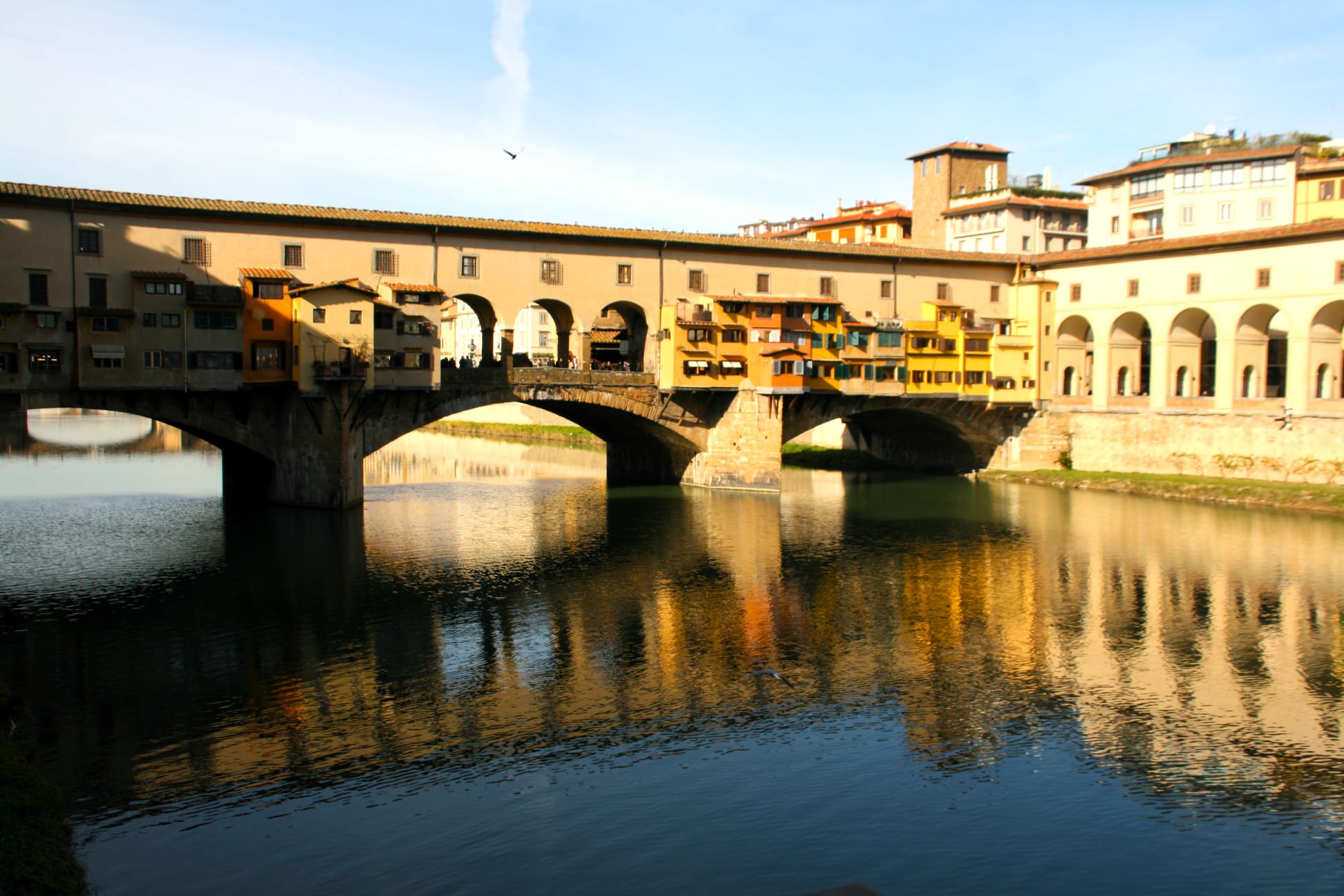
Ponte Vecchio is one of the most iconic symbols of Florence. The beautiful bridge is translated to ‘Old Bridge’, but at times may have been referred to as ‘Florence’s bridge of Gold’. Overflowing with character, beautiful to view, etched in history and with a whiff of romance in the air, it draws the inevitable crowd.
My journey through Florence has taken me to churches, art galleries, restaurants and palaces. In my recent visit to Palazzo Vecchio, I learned, and you may recall, that ‘Vecchio’ means Old. A quick search immediately informs me that ‘Ponte’ means bridge.
Ponte Vecchio embodies the spirit of Florence. Its beauty, architecture, resistance, history, character and secret passage will all be explored in this blog.
Ponte Vecchio history
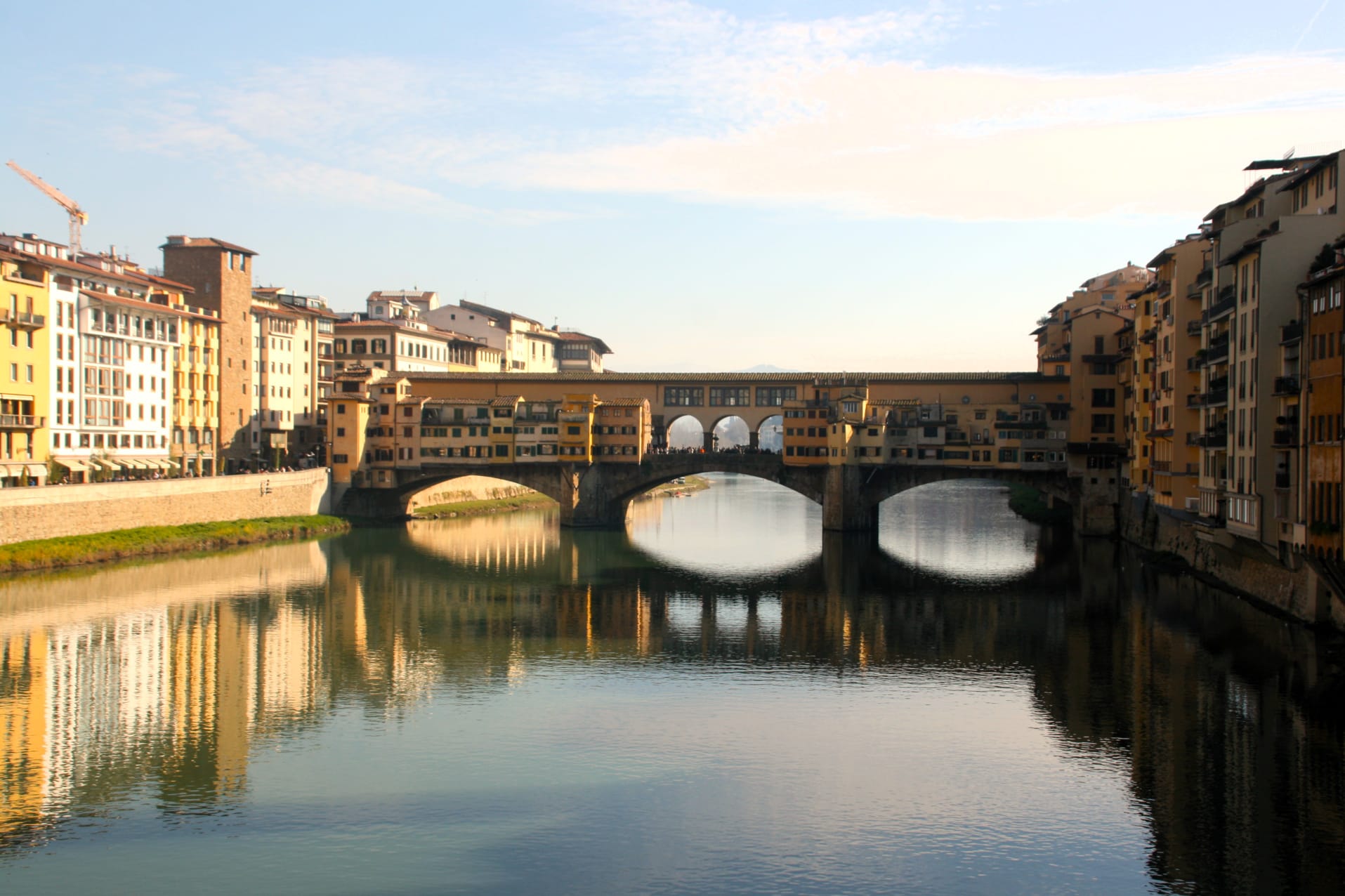
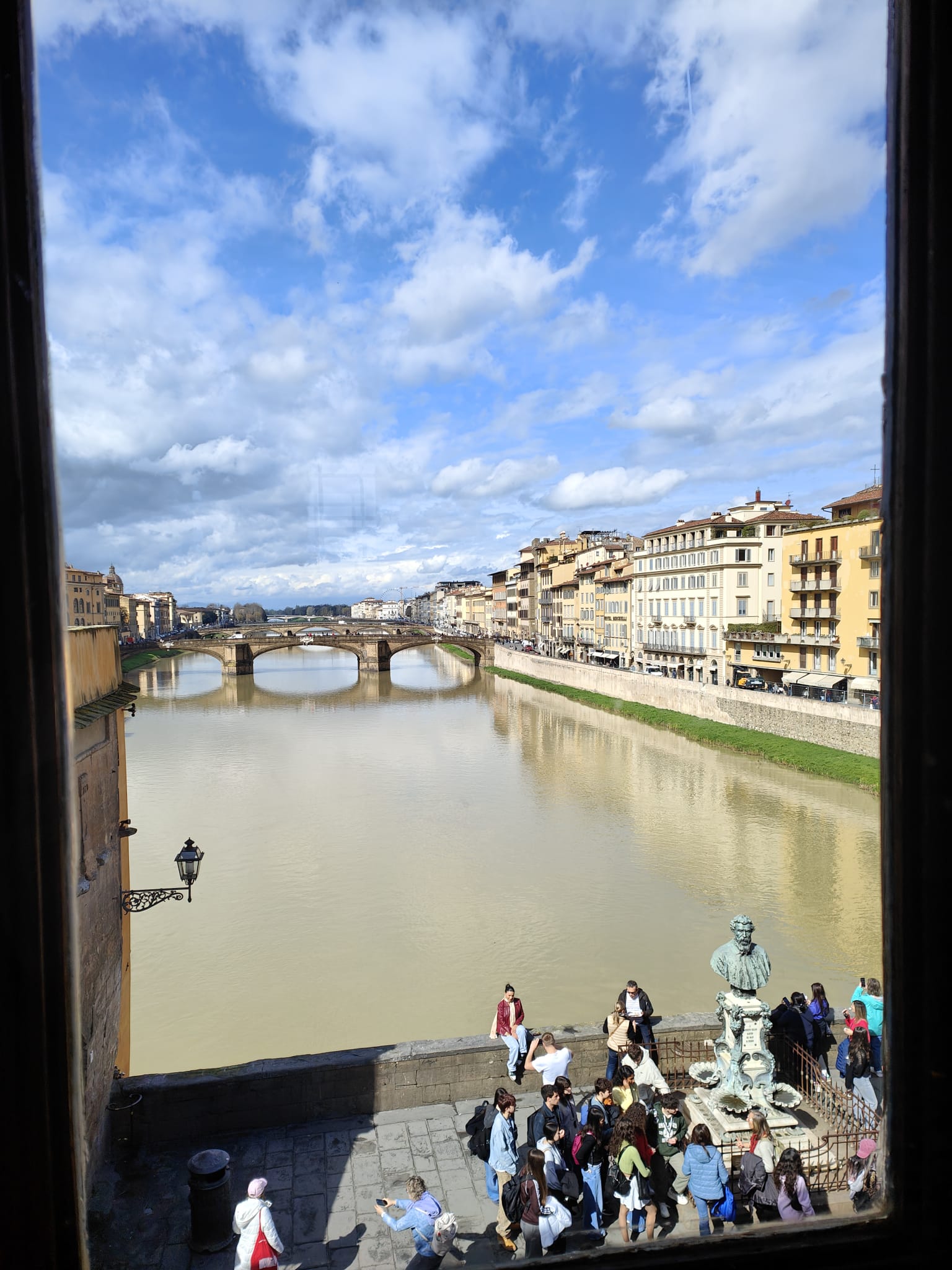
Ponte Vecchio crosses over the narrowest point of the River Arno. The River Arno is the largest river in the region and second most important river in central Italy after the Tiber. It runs from its source in the mountains close to the Tuscan and Emilia-Romagna border. The Arno flows across Tuscany to the Ligurian Sea at Pisa.
The Arno River, whilst I have always seen it looking peaceful in Florence, has an historic aggressive side to it. The river destroyed the original bridges when it burst its banks in 1333. That resulted in a new bridge being commissioned. The bridge took 5 years to be built and was completed in 1345. The bridge is an outstanding engineering achievement confirmed in that it still stands to this day.
Over the centuries Ponte Vecchio became a desirable meeting point, a place that has constantly evolved. Shops were constructed on the bridge to accommodate butchers, tanners, fish mongers, leather artisans, jewelers who plied their trade on the bridge which has always bustled with people.
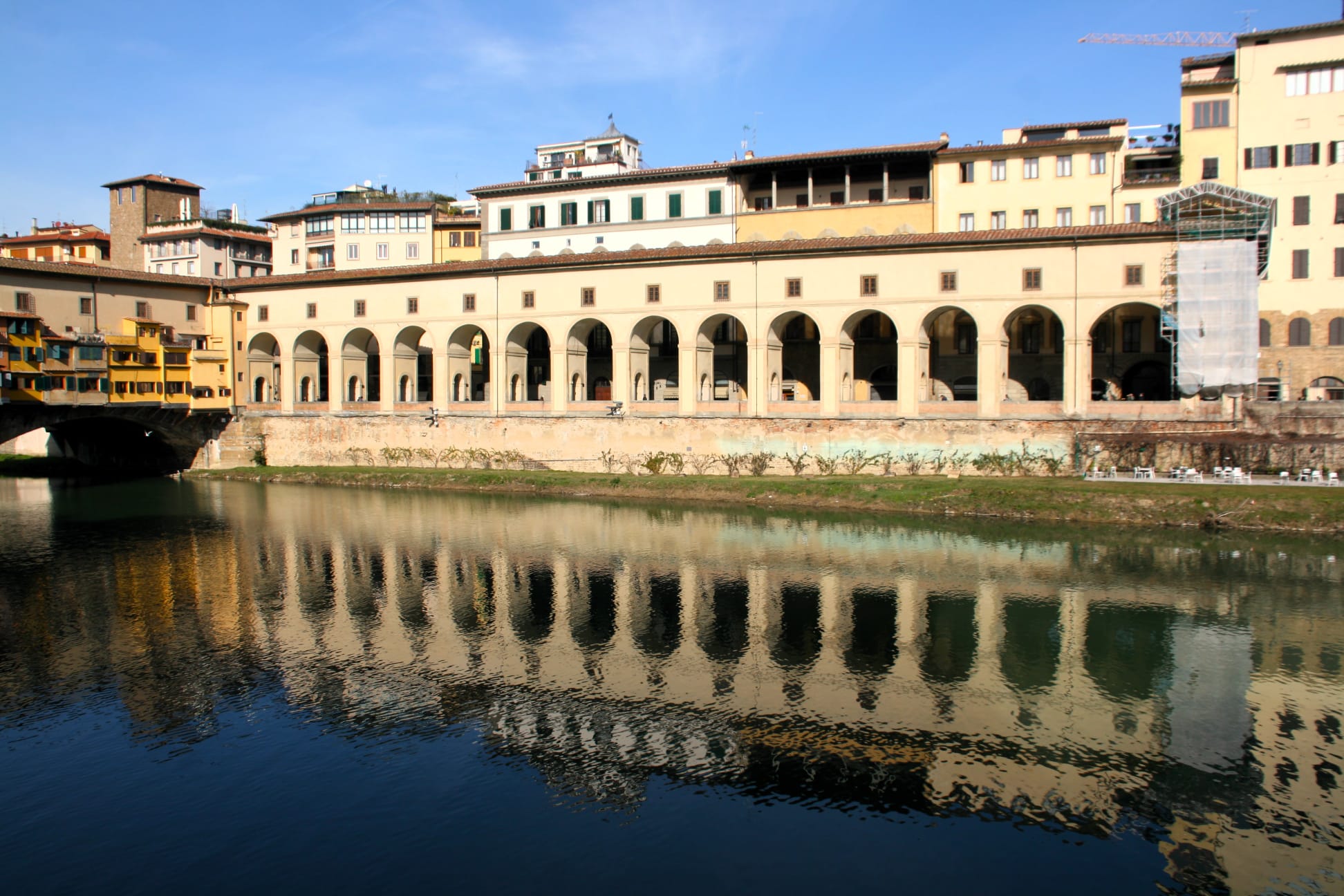
The powerful Medici family has left evidence of its presence all over the city. Ponte Vecchio is no exception. I will explore this further in the blog, but Cosimo 1st instructed his architect to build a “secret passage” that connected Palazzo Vecchio with Palazzo Pitti.
During World War II, when the German army was retreating from the British Army, Ponte Vecchio was not destroyed unlike all the other bridges in Florence. Rumours are that Hitler himself gave orders that the bridge was not to be destroyed. Instead, the buildings at each end of Ponte Vecchio were destroyed to halt the British advance.
In 1966 the Arno overflowed its banks. This tragic event killed over a hundred people and did so much damage and destruction to the city. Incredibly the bridge survived to tell another tale, so to speak, having been completely (shops as well) submerged under torrents of water.
Today Ponte Vecchio is now a must see for all visitors. The bridge is always packed with crowds. Romance sometimes feels in the air. It is a perfect spot to enjoy views of the River Arno and the City of Florence. Good are on sale in the shops. Although the gold trade may have diminished the sale of jewellery continues.
Ponte Vecchio Architecture
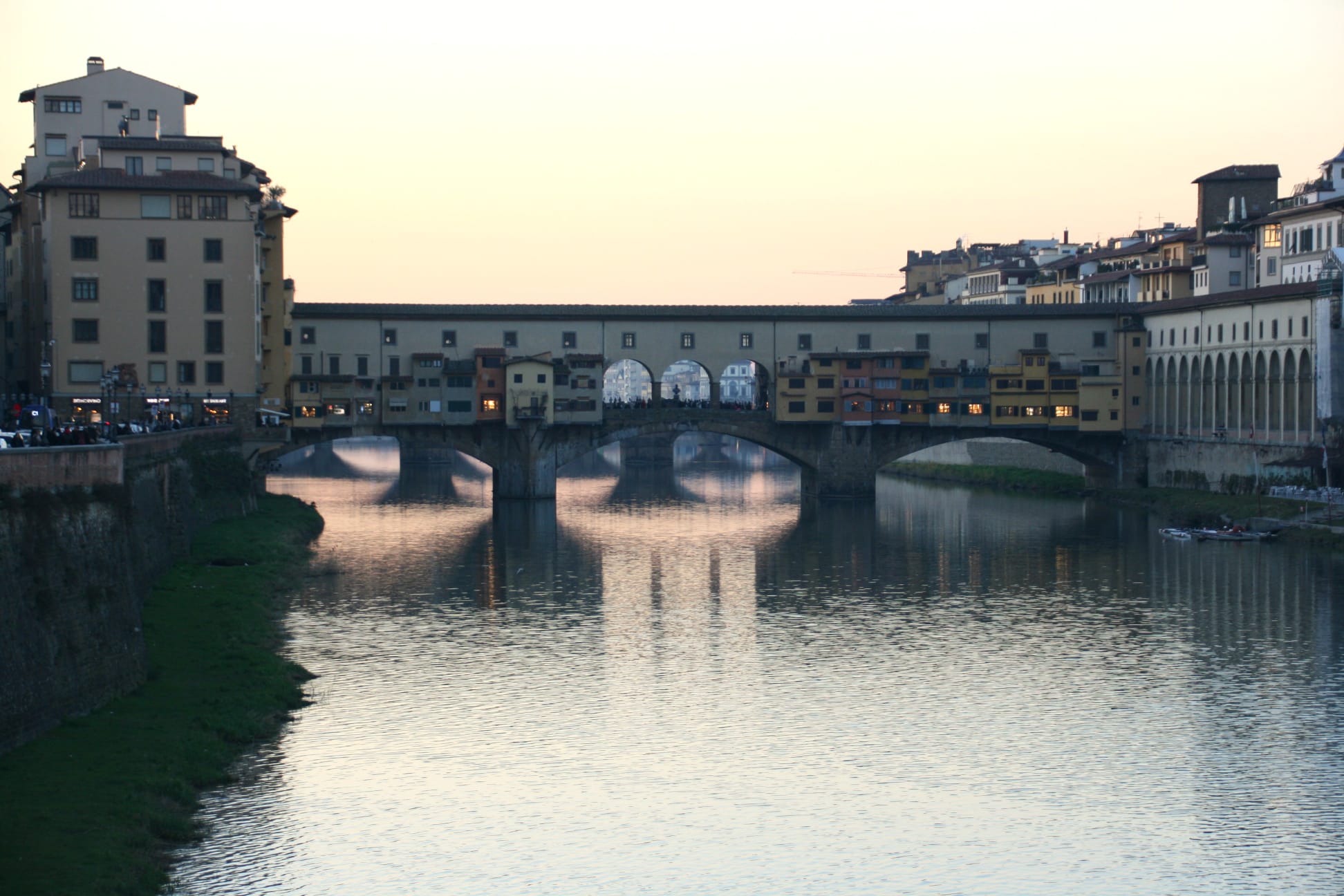
Taddeo Gaddi (a pupil of Giotto), it is believed, was designer and builder of Ponte Vecchio. Ponte Vecchio consists of 3 shallow segmental arches, a breakaway in design from the classical Roman bridge design.
The middle of the three arches is the largest with a 30m span and the arches either side spanning 27m. The 14th century bridge is constructed out of stone. There are two islands in the middle of the bridge to support the arches. My research and studies teach me that these islands are often referred to as piers. They are connected to the riverbed by oak piles then surrounded by concrete and stone. The two piers feature triangular prows which assist in deflecting the river’s flow.
The bridge soon became the location of a medieval marketplace. One can imagine the frenzy on the bridge as ‘wheeling and dealing’ took place.
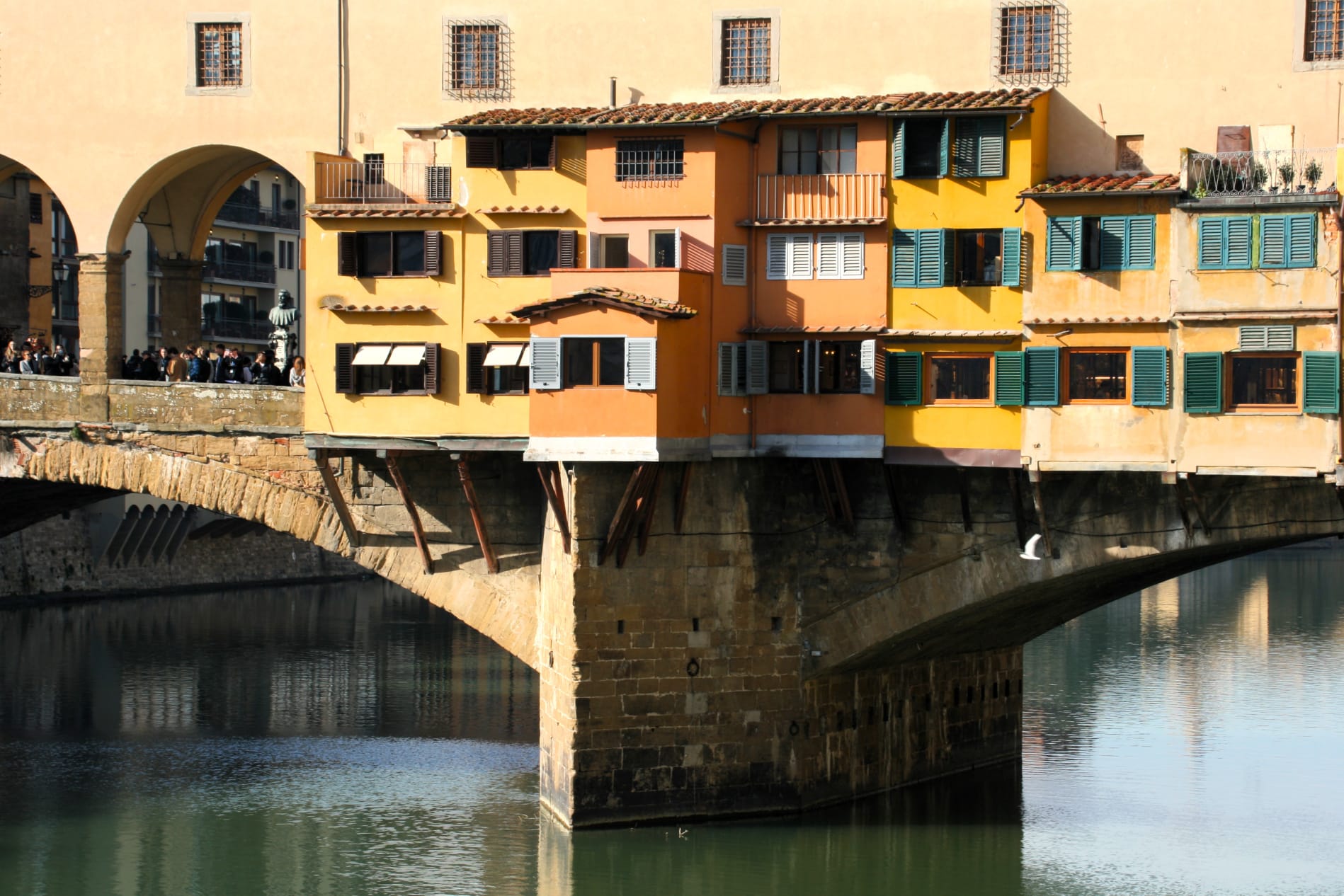
A byproduct of the marketplace was the smell of the goods sold there! Grand Duke Ferdinando I de’ Medici (1587-1609) was not happy with it and took merciless action. He sent the vendors away and instructed that the only shops allowed were goldsmiths and jewellers. Thus, the appellation ‘the bridge of gold’ was born. 48 shops grace the bridge. Trade is still common practice to this day, but only gold and jewellery are permitted there.
My research has also highlighted that the design of Ponte Vecchio may have inspired the ‘Pultney Bridge in Bath, England. Surely a reason to revisit Bath and explore the similarities. Both bridges just mentioned are part of 4 in the world that have shops across its full span on both sides (the other two being in Venice – Italy and Erfurt – Germany).
Benvenuto Cellini
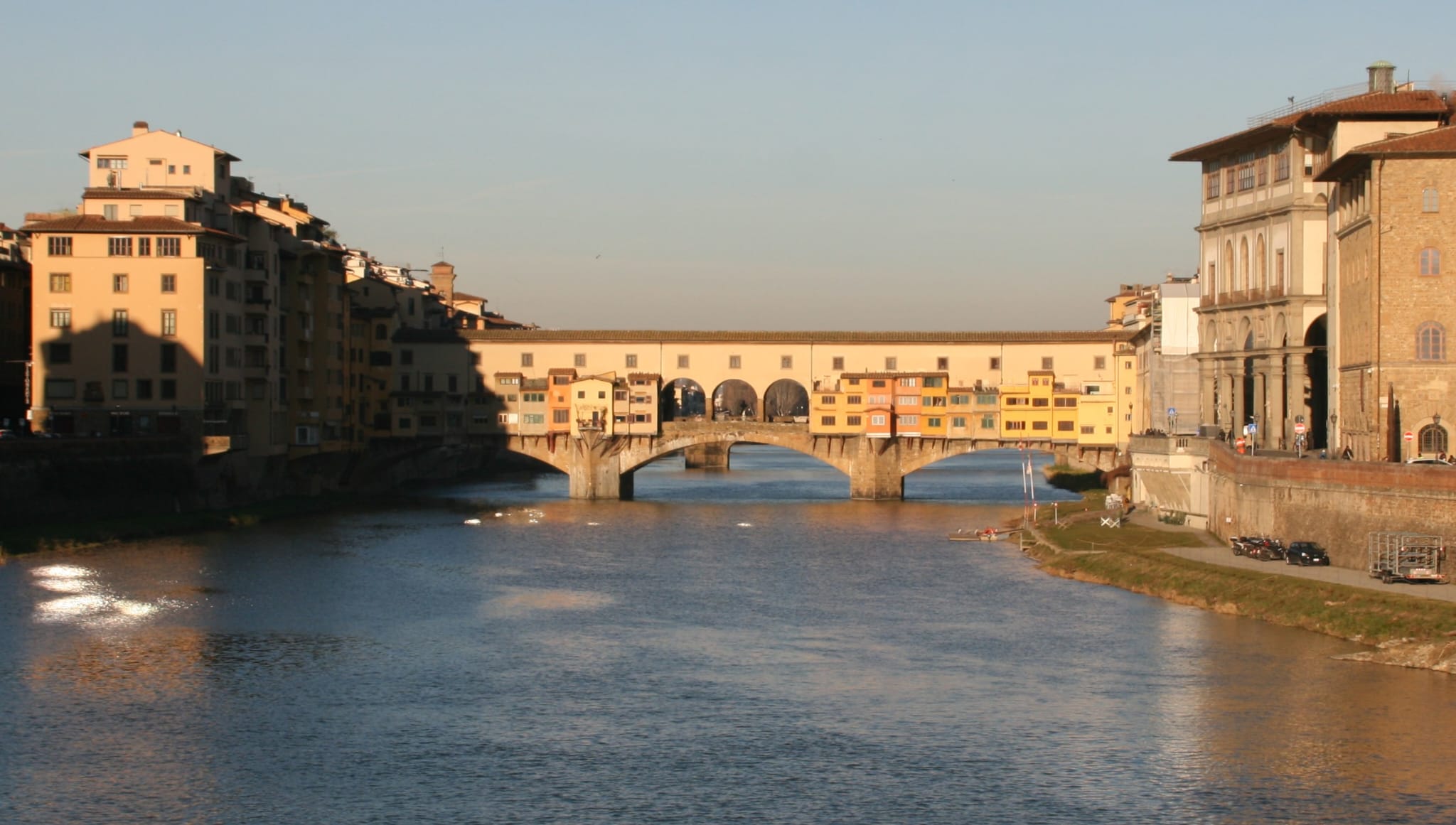
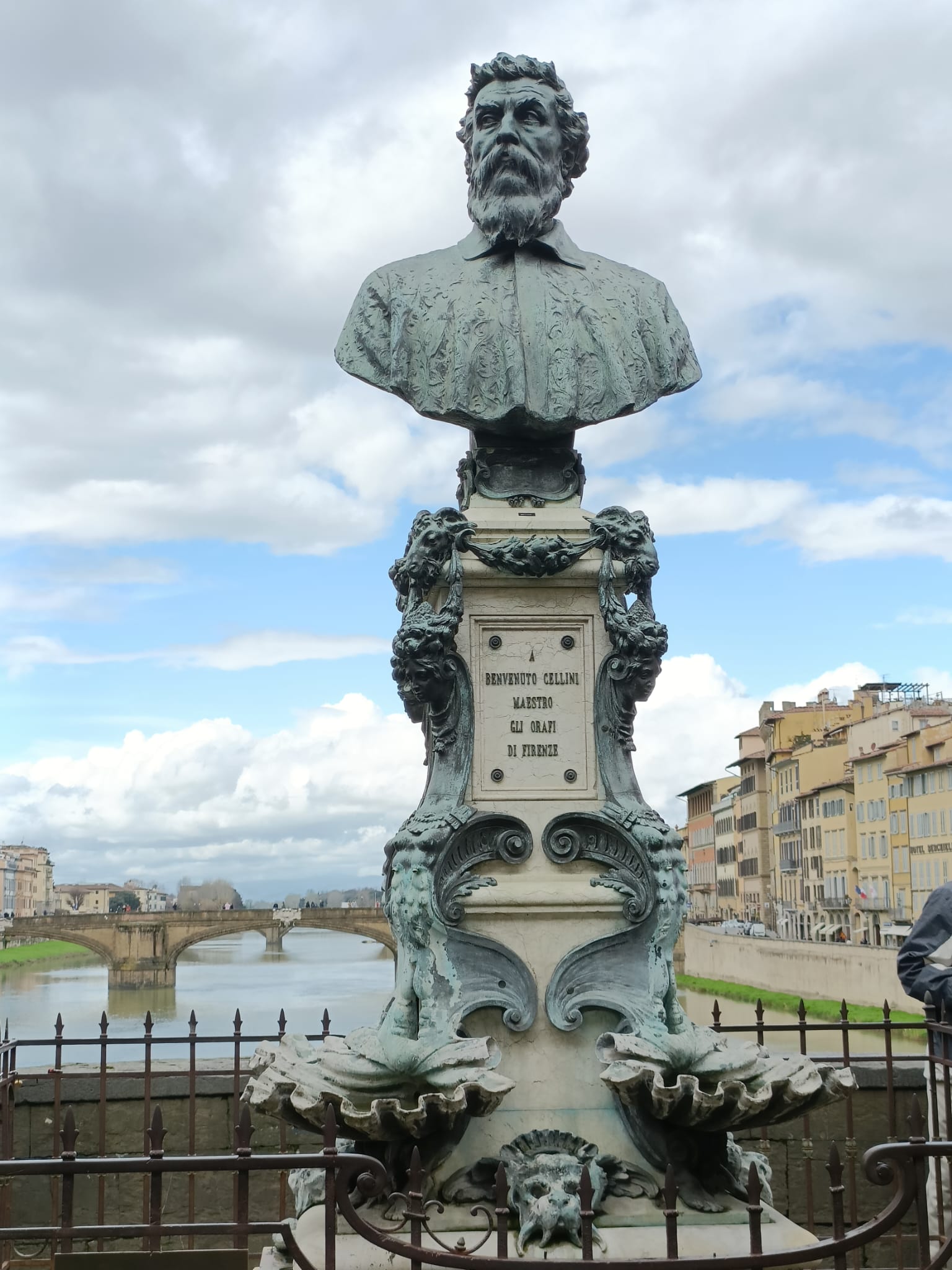
Benvenuto Cellini was a 16th century artist who started his career as a goldsmith and is honoured with a bronze bust sitting on a fountain in the middle of the bridge. Someone else I never knew existed! This educational journey makes that short lived.
An internet search informs me who he was. Not much of his work survives, which is perhaps why he is a little less known. He was a creator of a couple of famous pieces – the first one is a magnificent gold salt cellar made for Francis I of France, now in Vienna. Can’t remember seeing that in my visit.
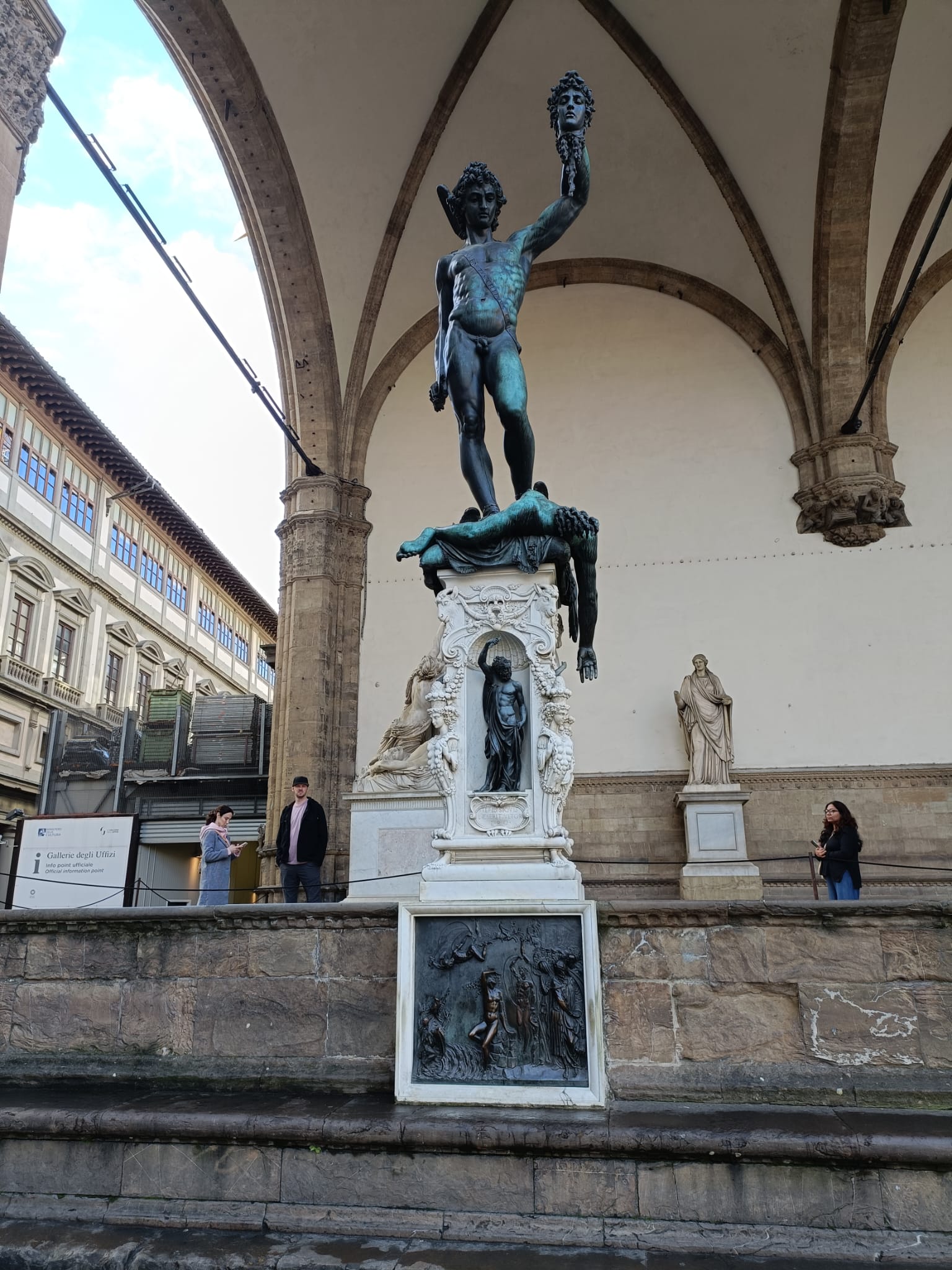
The second is one that I have seen in Florence. This is the bronze statue of Perseus holding the head of Medusa. It now stands in the Loggia dei Lanzi which is very visible in the south corner of Piazza Signoria close to the entrance of Palazzo Vecchio.
Vasari Corridor
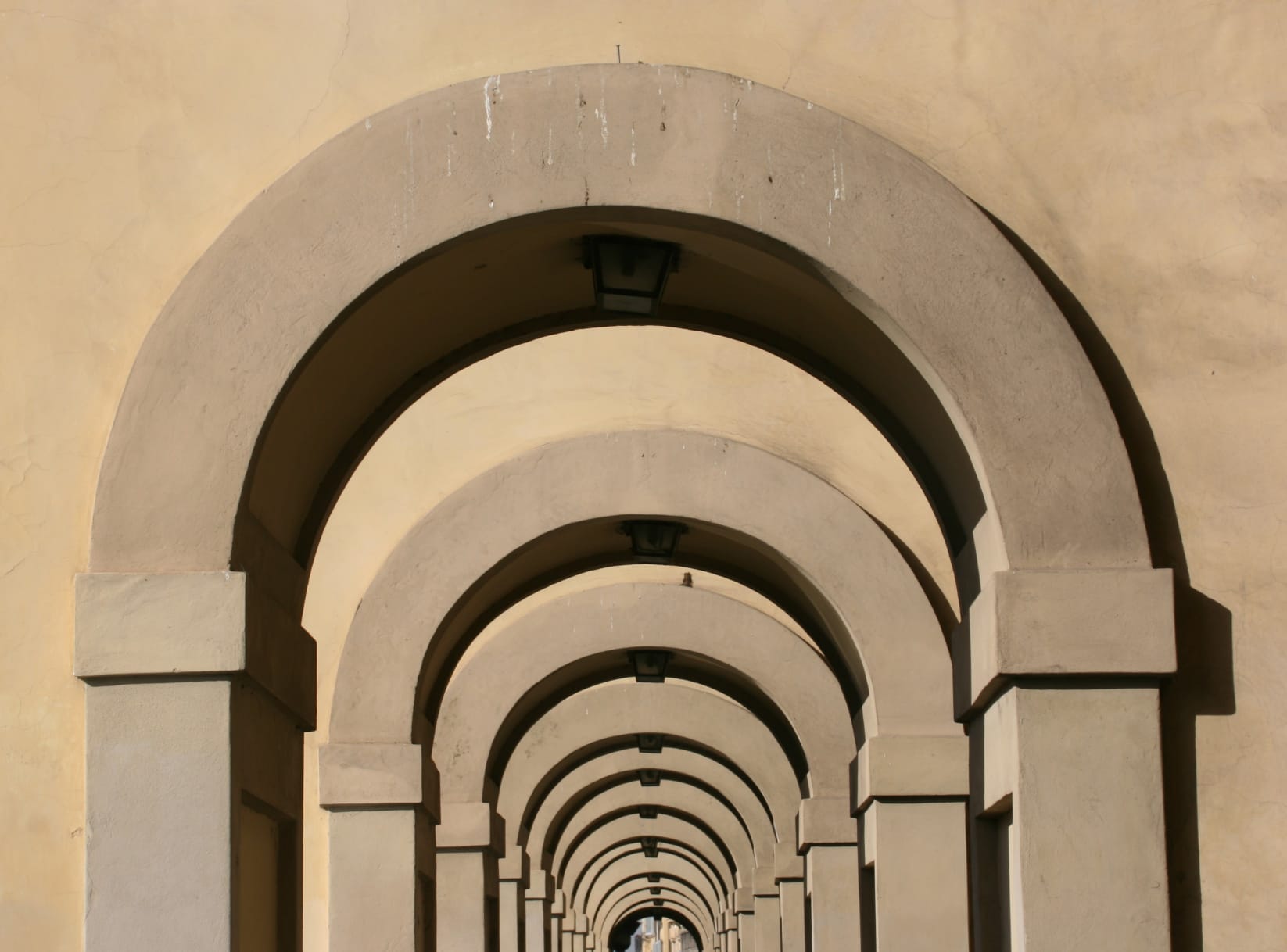
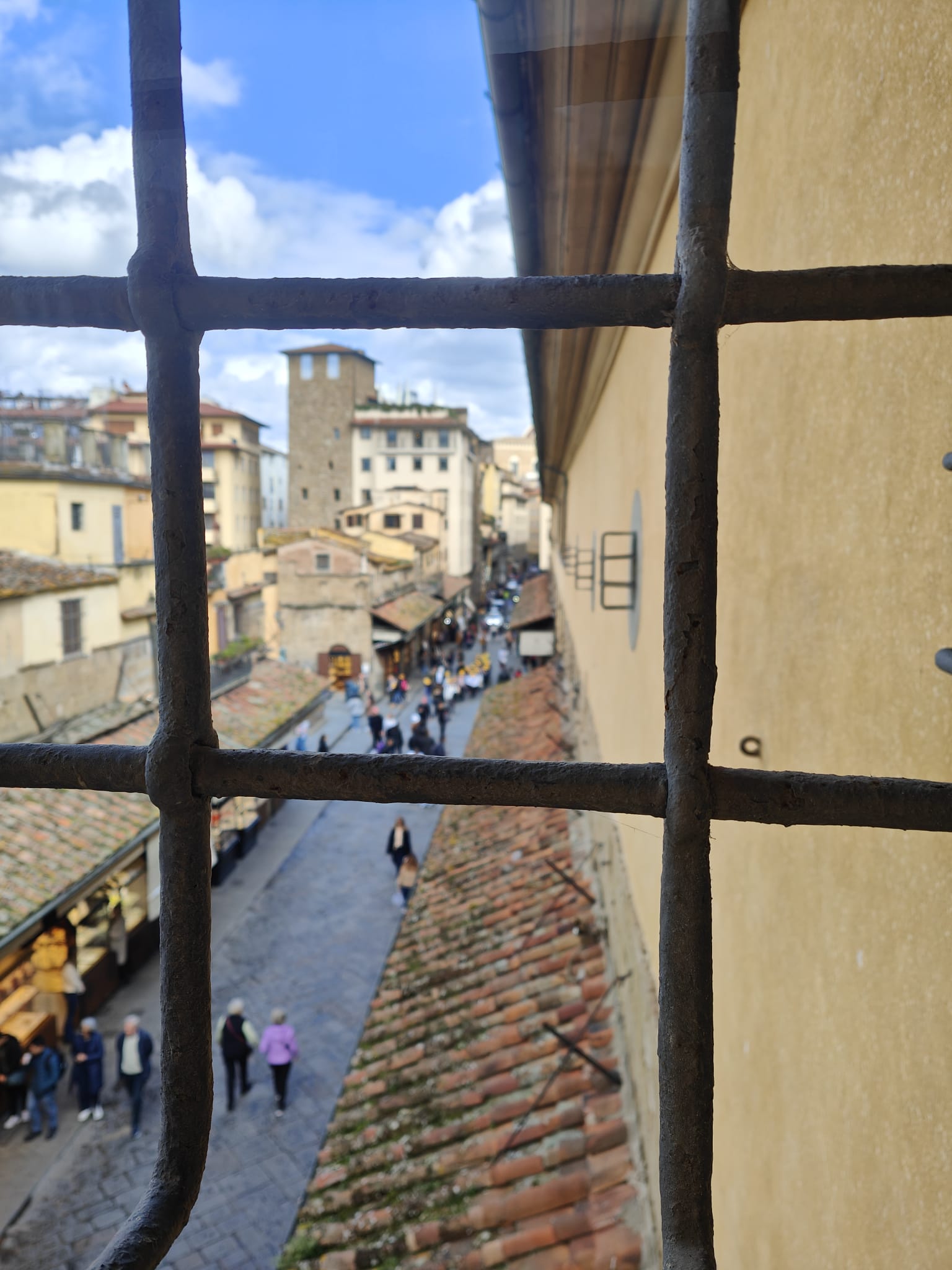
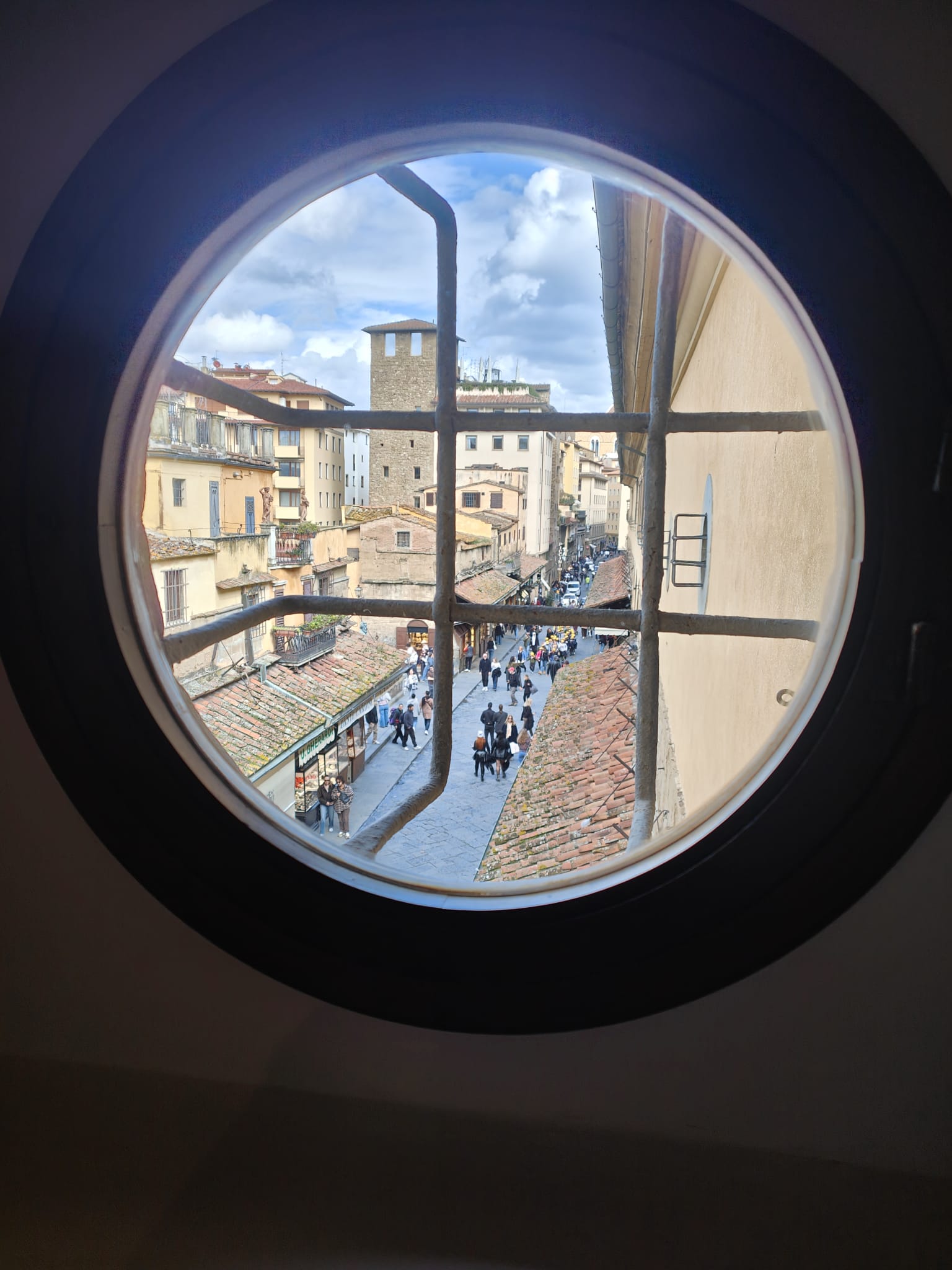
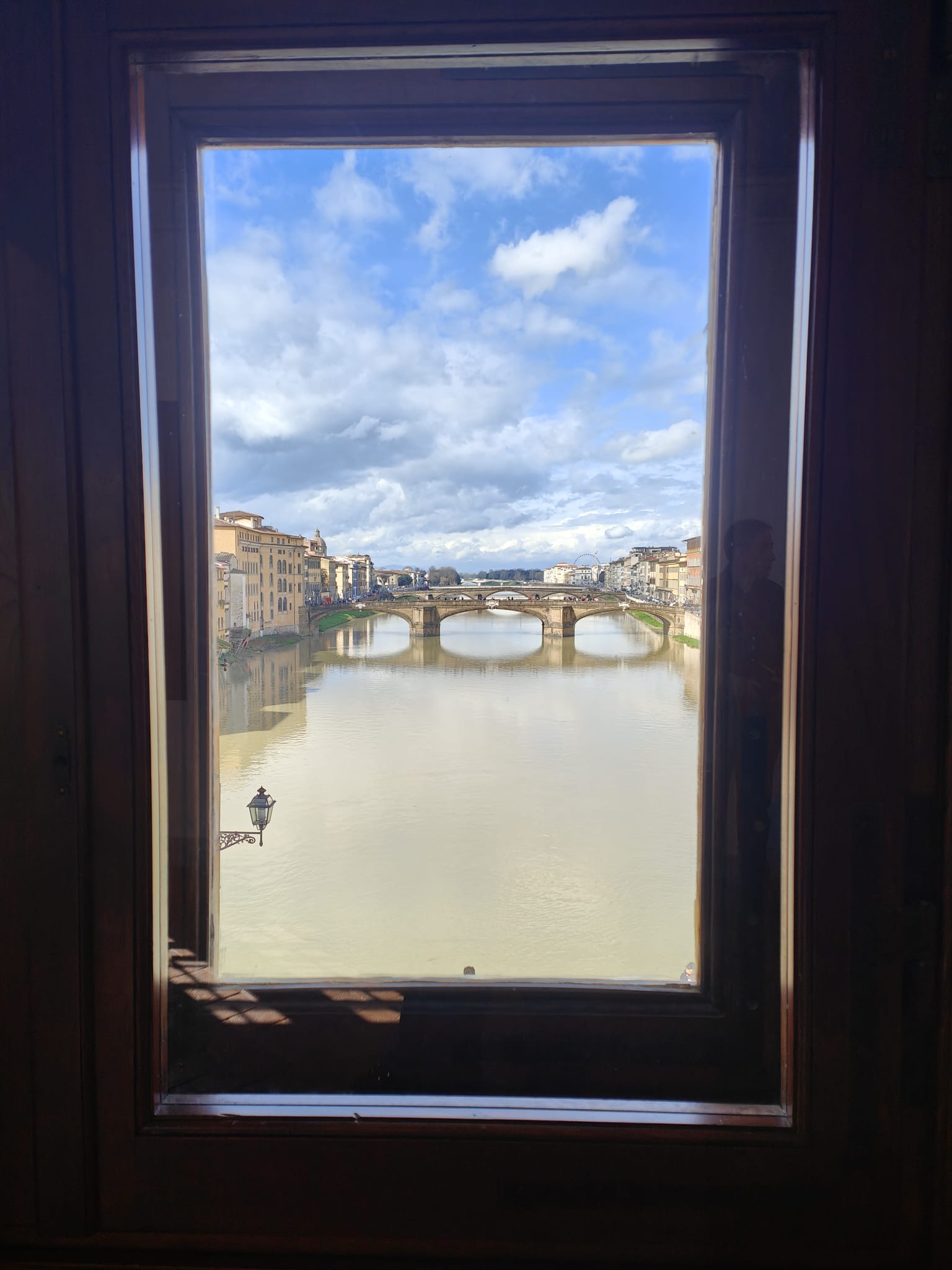
The most eye-catching modification to the bridge came in the sixteenth century. Cosimo I de’ Medici instructed Giorgio Vasari to construct a corridor connecting Palazzo Vecchio and Uffizi Gallery with the Palazzo Pitti.
This corridor provided Cosimo and his successors (and their families) private access between their private residence (Pitti) and the city’s government building (Vecchio). The corridor was filled with paintings and busts of significant figures from Florentine history. This was done to show status, wealth and power.
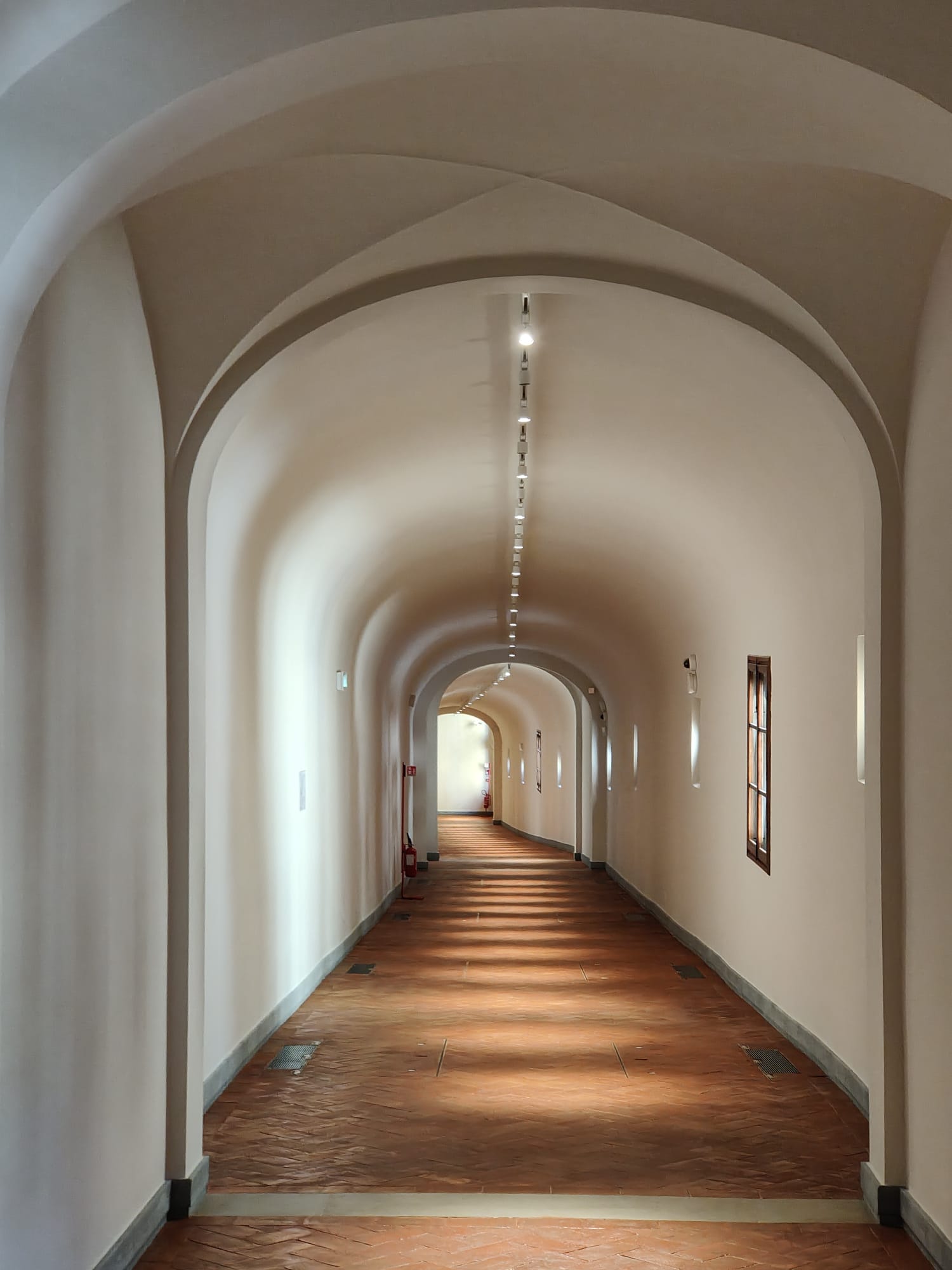
The corridor recently opened after refurbishment and is very bland and empty, which is in stark contrast to Cosimo’s Walk. Access to the corridor is gained through the Uffizi Gallery.
Conclusions
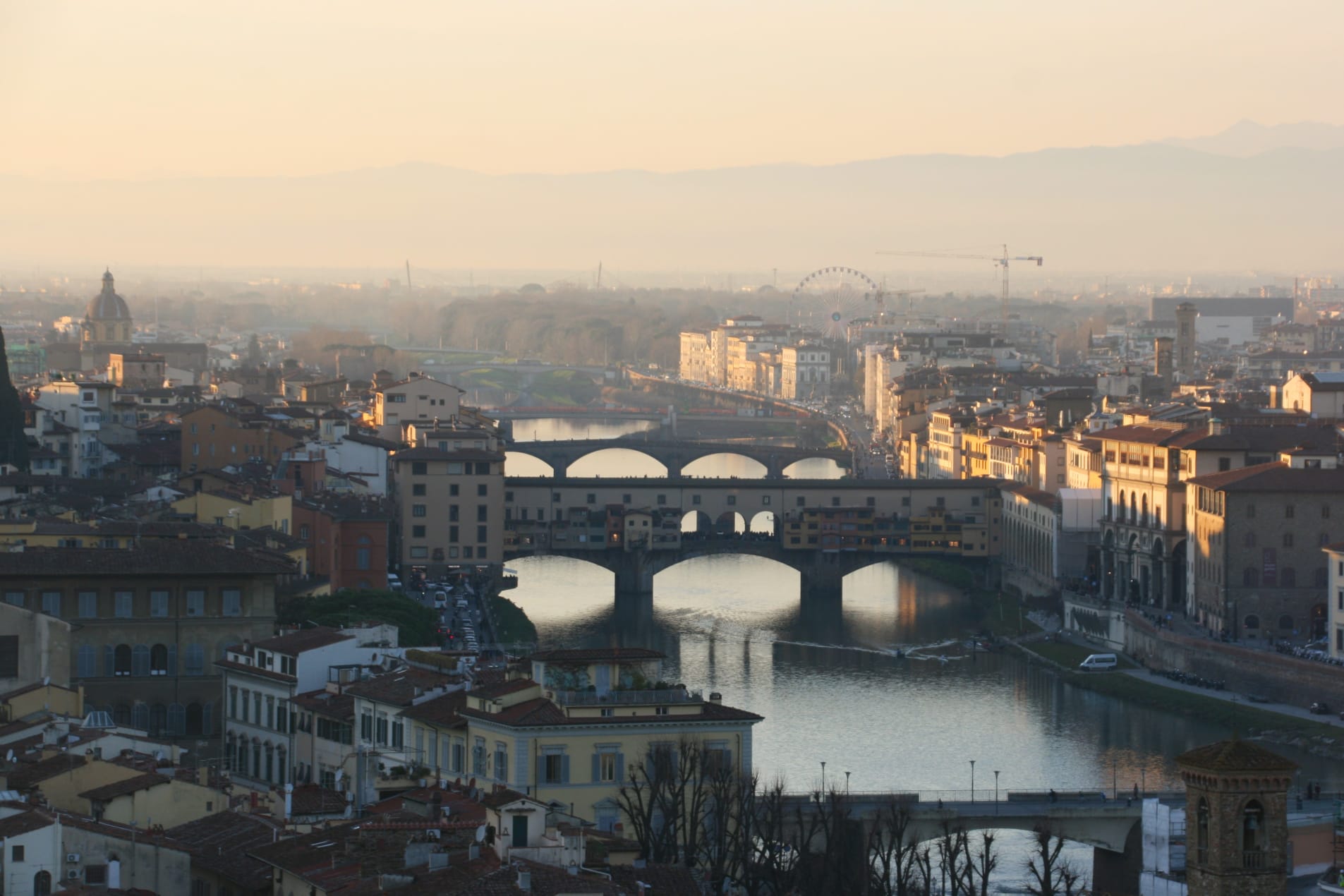
In conclusion Ponte Vecchio cannot be missed on a visit to Florence. Not many do miss it as it is always crowded with tourists. I prefer to view the bridge from different points around the city.
I found the Vasari corridor intriguing. How many know about the ‘secret passage’, I’m not sure.
Ponte Vecchio has played an important role in the history of the city, providing a path over the River Arno. The famous bridge has evolved over time, from a thriving marketplace to a refined, gold trading outlet.
It has withstood the power of nature and survived the bleak periods in the history of Florence. I’m sure it would have many stories to tell. My preference is viewing it from afar. Everybody flocks to Piazzale Michelangelo for a view of the bridge and city. The views here are stunning but I prefer to find a less crowded viewpoint.
My favourite so far has been in a nearby restaurant with an outside seating area overlooking the river. As I sip on some wine, the sun beats down and the bridge displays a kaleidoscope of colour. The golden moment is beautifully reflected in the peaceful Arno beneath. I ponder the need to revisit Bath to view a similar example. Then I consider if Ponte Vecchio is up there with some of the great bridges around the world. Maybe a different type of blog to write in the future.
7 Replies to “Ponte Vecchio, Historical Landmark, City of Florence, Italy”
Every day is a school day with your posts! I knew that the Ponte Vecchio was lined with jeweller’s shops but I had no idea why until I read this.
I can certainly see the similarities between the Ponte Vecchio and Pultney Bridge – I’d read a blog about the world’s best bridges.
Ponte Vecchio is such a recognizable icon of Florence, along with the Duomo. It is always a delight to work my way through the crowds to do some window shopping and stop for photos mid-span. I’ve always been fascinated by its survival from the bombing attacks.
I need to plan a return trip just so I can check out the Vasari Corridor. Somehow I missed knowing about this gem on previous visits and I’m so glad to read that it has been refurbished and reopened for the curious traveller.
Ponte Vecchio is so iconic with the shops atop the bridge. It applies such a once in a lifetime unique touch to its architecture so I am pleased to hear that other bridges in Europe took inspiration. The history lesson was welcomed and I know get why there are only jewellers and gold merchants allowed to do business there. It’s been a long time since my last Florence visit, time to change that!
Carolin | Solo Travel Story
But what did they call the bridge when it was new, I wonder. Or has it always been old before its time?! Thought marvelous it looks, and it has to be something special to not be destroyed during such a difficult time in history. I don’t know if the views of the bridge or from the bridge would be better, but I do know I could happily stare out from the shade of the bridge for longer than necessary, maybe even despite the crowds
Florence’s Ponte Vecchio is really one of the things to see and experience while visiting this great Tuscan city along the River Arno. While packed with tourists and locals alike, the old bridge, like a stubborn beast, refuses to be tamed (flood or fuhrer), yet continues to serve the city as its rightful master. I have yet to revisit Florence again and hopefully I make it next year flyingbaguette
We wondered why there were so many jewellers and gold merchants on the bridge – thank you for the history lesson! The Ponte Vecchio is absolutely the prettiest of Florence’s bridges and we really enjoyed visiting. It was also nice to see the views of the river and bridge from the Varsari Corridor because we decided not to visit after learning about it being so bland following its refurb. I can see why it Ponte Vecchio could inspire a post about some of the more spectacular bridges around the world.
The 1966 flood sounds horrendous. I’ve looked through the photos that can be found and I guess that not many were or could have been taken at the height of the destruction. There is one photo that shows the damage to the shops post event. Reading about the floods it seems that, beyond the terrible loss of life, millions of Euros worth of fine art was lost but one wonders about the gold in those shops and if there was enough warning to get stock removed to a higher place. I doubt it somehow. Who would have thought that the river would rise that high? Could you consider a key word or two about the 1966 flood?